
Preparing for a trekking adventure in Peru involves more than choosing comfortable hiking boots and filling a backpack. The Peruvian Andes bring together high mountain passes, changing weather, and trails that demand thoughtful preparation, even when traveling with a fully supported trekking team.
A well-planned luxury trekking packing list helps you bring the essentials without carrying unnecessary equipment. From breathable clothing and reliable footwear to personal items for evenings at camp, every choice can make a difference to your experience.
Whether you’re walking the historic Inca Trail to Machu Picchu or exploring the remote landscapes of Salkantay, Lares, or Ausangate, this guide explains what to pack, what to keep in your daypack, and what to confirm with your trekking operator before departure.
Table of Contents
Luxury Trekking Packing List: Essential Items
Your final packing list will depend on the route, season, duration, and accommodation included in your trip. However, several essentials apply to most guided trekking experiences in the Cusco region.
Essential Clothing and Layers
Choose lightweight clothing that can be adjusted throughout the day.
- Moisture-wicking hiking shirts, preferably long-sleeved for sun protection.
- Comfortable hiking pants that allow unrestricted movement.
- Thermal base layers for colder conditions.
- Fleece or another insulating mid-layer.
- Insulated jacket for cold mornings and evenings.
- Waterproof, windproof outer jacket.
- Waterproof pants when conditions require them.
- Warm hat, sun hat, and gloves.
- Breathable underwear and extra hiking socks.
Pack enough clean clothing for your itinerary, but remember that carrying several similar outfits may add unnecessary weight.
Footwear and Hiking Accessories
Your feet will do much of the work, making reliable footwear especially important.
- Properly fitted hiking boots or trail shoes.
- Moisture-wicking wool or synthetic socks.
- Comfortable shoes or sandals for camp, if your itinerary includes camping.
- Trekking poles, unless your operator provides them.
- Optional gaiters for particularly wet or muddy routes.
Prioritize footwear you’ve already tested on longer walks rather than introducing new shoes during your trek.
Personal Essentials and Sun Protection
Keep these practical items on your checklist:
- Broad-spectrum, water-resistant sunscreen with SPF 30 or higher.
- Sunglasses with UV protection.
- Lip balm with SPF.
- Reusable water bottle or hydration system.
- Personal medications and basic hygiene supplies.
- Headlamp with sufficient battery power.
- Small waterproof bags for valuables and electronics.
- Passport or identification required for your itinerary.
Confirm which items are already provided before purchasing additional equipment.
What Clothing Should You Pack for Trekking in Peru?
The most practical way to dress for trekking in the Andes is to use a layering system.
Temperatures and conditions can feel very different while climbing a mountain pass, resting along an exposed trail, or arriving at camp after sunset. Wearing adaptable layers helps you manage these changes without relying on one heavy jacket.
Base Layers for Breathability
Your base layer sits directly against your skin and helps manage moisture produced while hiking.
Merino wool and moisture-wicking synthetic fabrics are practical choices because they manage perspiration better than everyday cotton clothing. Cotton tends to retain moisture and can leave you feeling cold when the temperature drops.
For warmer sections of a trail, a lightweight hiking shirt may be sufficient. At higher elevations or during colder mornings, thermal tops and leggings can provide additional protection beneath your regular clothing.
Choose comfortable fabrics that won’t cause irritation after several hours of walking.
Insulating Layers for Cold Conditions
An insulating layer helps retain body heat when temperatures fall.
A lightweight fleece is useful during rest breaks or cooler hiking conditions. An insulated jacket provides additional warmth when you stop moving or spend time outdoors at camp.
For multi-day treks through higher mountain areas, bringing both can offer greater flexibility.
You may feel warm while climbing uphill but become cold quickly after stopping. Keeping an accessible insulating layer in your daypack allows you to respond without unpacking your main luggage.
Waterproof and Windproof Protection
A waterproof outer layer is essential for changing mountain conditions.
Choose a breathable waterproof jacket that protects against rain and wind while allowing enough room for your insulating layers. Waterproof pants can also be valuable during extended periods of rainfall.
Water-resistant clothing and fully waterproof clothing are not necessarily equivalent. A lightweight windbreaker may work during mild conditions but may not provide sufficient protection in persistent rain.
According to REI’s guide to dressing in layers, combining moisture management, insulation, and weather protection helps hikers adapt to different outdoor conditions.
Rather than packing for one forecast, prepare for the range of weather your selected route may experience.
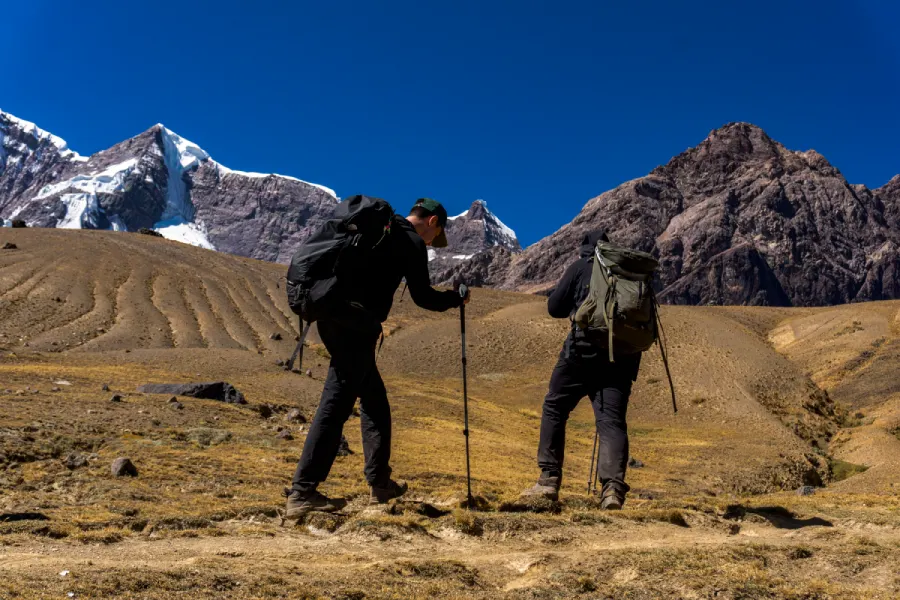
Choosing the Right Footwear for Andean Trails
Comfortable footwear is one of the most important decisions you’ll make before trekking in Peru.
Trails around Cusco can include stone steps, uneven ground, steep descents, dirt paths, and wet surfaces. The right shoes should provide traction, stability, and sufficient space for your feet during long walking days.
Hiking Boots vs. Hiking Shoes
Traditional hiking boots generally offer more coverage and protection, making them a practical choice for rough terrain, colder conditions, or longer itineraries.
Lighter hiking shoes can work well on suitable trails, particularly for travelers accustomed to wearing them.
Neither option is automatically best for everyone.
Consider the terrain, weather, pack weight, and your own hiking experience. More importantly, choose footwear that fits correctly and feels comfortable when walking both uphill and downhill.
Socks and Blister Prevention
Socks deserve just as much attention as your footwear.
Merino wool or synthetic hiking socks help manage moisture and reduce friction. Avoid relying on ordinary cotton socks, which tend to remain damp.
Bring spare pairs so you can change into dry socks when necessary.
Before departure, test your chosen footwear on several walks. If you notice rubbing or pressure points, address them before beginning your trek.
As explained in REI’s blister prevention guide, properly fitting footwear and moisture management are important steps in preventing blisters.
What Should You Carry in Your Daypack?
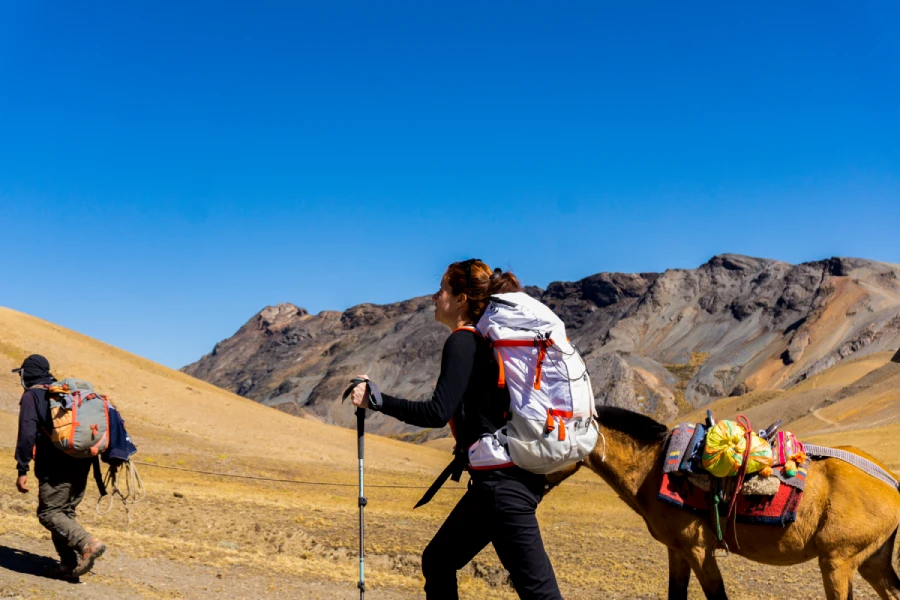
On supported luxury treks, the logistics team may transport some of your personal belongings between overnight stops. Your daypack, however, remains with you throughout the walk.
The goal is to keep essential items accessible without adding unnecessary weight.
Essentials to Keep Within Reach
Your daypack should contain the items you’re most likely to need between departure and your next stop.
A practical checklist includes:
- Waterproof jacket and an additional warm layer.
- Drinking water and personal snacks.
- Sunscreen, sunglasses, and sun hat.
- Personal medications and small first-aid essentials.
- Phone or camera.
- Identification and important personal documents.
- Headlamp when relevant to the itinerary.
- Rain protection for your backpack.
- Small bag for collecting personal waste.
Your guide can advise which additional equipment is appropriate for the route.
Water, Snacks, and Personal Medication
Adequate hydration is important during physical activity, particularly at altitude.
Carry sufficient drinking water for the planned hiking section and confirm where safe refills will be available. Never assume that untreated water from streams or lakes is safe to drink.
Although guided treks may include meals and snacks, bringing a few familiar energy bars or other suitable snacks can be useful.
Keep medications you need during the day in your personal bag rather than luggage transported separately. Travelers with medical concerns should discuss high-altitude plans with a qualified healthcare professional before departure.
Protecting Your Gear from Rain
Even a waterproof backpack cover may not keep everything dry during prolonged rain.
Use waterproof liners or dry bags to protect spare clothing, medication, documents, and electronics.
Separating wet and dry items also makes organizing your belongings easier at the end of the day.
What to Pack for Evenings at a Luxury Trekking Camp
One of the advantages of a luxury trekking experience is returning to an organized camp after a demanding day on the trail.
Depending on your chosen itinerary, glamping arrangements may include comfortable beds, prepared meals, and other amenities. Nevertheless, personal clothing and hygiene essentials remain your responsibility.
Warm and Dry Clothing for Camp
After hiking, changing into dry clothing can make the evening considerably more comfortable.
Consider bringing:
- Clean thermal clothing or comfortable sleepwear.
- Warm socks reserved for camp.
- A fleece or insulated jacket.
- A warm hat for colder evenings.
- Lightweight camp shoes, if appropriate.
Keep your overnight clothing protected from moisture inside your main bag.
Personal Comfort and Toiletries
Pack a compact toiletry kit with a toothbrush, toothpaste, personal skincare products, and any hygiene items you regularly use.
A small travel towel, moisturizer, and lip balm may also be helpful.
Avoid bringing full-sized products when smaller containers are sufficient. Some camps provide private bathrooms and hot showers, while other arrangements depend on the route.
Review your accommodation details before deciding what you need.
What Is Already Included in a Luxury Trekking Tour?
A luxury trekking experience can reduce the amount of camping equipment travelers need to organize themselves.
However, luxury does not mean that every item is automatically included.
The exact services depend on the route, itinerary, and operator. Understanding these differences before packing helps prevent unnecessary purchases or missing equipment.
Camping Equipment and Support Services
With Glamping Inca Trail’s luxury trekking tours in Peru, travelers can compare routes featuring guided trekking, organized logistics, and different accommodation arrangements.
For example, the Private Inca Trail Trek 4 Days includes glamping accommodation, meals prepared by a private chef, drinking water, a support team with porters, and a duffel bag for personal belongings.
By contrast, the Short Inca Trail Tour to Machu Picchu includes an overnight hotel stay rather than camping and provides hiking poles.
These differences directly influence what travelers need to bring.
What to Confirm Before Your Departure
Use this comparison as a starting point when reviewing your itinerary.
| Personal items to bring | Services to confirm with your operator |
|---|---|
| Hiking clothing and footwear | Camping or hotel accommodation |
| Warm layers and rain protection | Sleeping arrangements and bedding |
| Personal toiletries and medication | Drinking water and scheduled meals |
| Daypack and personal accessories | Duffel bag and luggage transport |
| Sun protection | Trekking poles and other equipment |
Before departure, ask whether you need a sleeping bag, how personal luggage will be transported, and whether there are weight or bag-size restrictions.
You should also confirm any special arrangements for dietary requirements, personal equipment, and overnight comfort.
The benefit of a well-organized trekking tour is not eliminating preparation. It is understanding which responsibilities are handled for you and which remain personal.
How Does Your Packing List Change by Season?
Peru’s mountain weather varies throughout the year, and your packing choices should reflect the conditions expected during your journey.
According to PROMPERÚ’s official climate information, the Andes generally experience a drier period from April to October and a rainier period from November to March.
These are seasonal patterns rather than guarantees of daily weather.
Packing for Drier Months
Drier conditions can make hiking more comfortable, but they do not eliminate the need for rain protection.
During this period, particularly at higher elevations, cold mornings and nights can make thermal layers and insulated clothing especially useful.
Bring sun protection, warm accessories, and a waterproof outer layer even when the forecast appears favorable.
Additional Protection for Rainier Months
When rainfall is more likely, prioritize waterproof clothing, footwear with appropriate traction, and reliable protection for your belongings.
Pack spare socks and keep overnight clothing in waterproof bags.
Trail conditions can change due to rain, so follow your guide’s recommendations and confirm any route restrictions before departure.
For a closer look at seasonal conditions, read our Best Time for Luxury Trekking in Peru guide.
Packing Considerations for Different Peru Trekking Routes
Although the same basic equipment applies to many Andean treks, different routes may require adjustments.
Elevation, duration, terrain, and accommodation all influence your packing decisions.
Inca Trail and Short Inca Trail
The traditional Inca Trail includes several days of walking through mountainous terrain and archaeological sites before reaching Machu Picchu.
Comfortable footwear, adjustable layers, and suitable rain protection are important throughout the route.
For the Short Inca Trail, overnight accommodation may be in Aguas Calientes rather than a campsite, depending on your booked tour.
This means you may not need the same overnight camping equipment required on longer expeditions.
Salkantay, Lares, and Other Multi-Day Treks
The Salkantay Trek takes travelers through high mountain landscapes and changing elevations. Clothing that combines insulation with protection against wind and rain is particularly important.
Lares itineraries also cross elevated Andean terrain, with conditions varying according to the specific route.
For both experiences, consider the number of hiking days, expected conditions, and accommodation arrangements before finalizing your clothing quantities.
Avoid assuming that two treks of equal duration require identical equipment.
Additional Considerations for Ausangate
Ausangate is among the more demanding high-altitude trekking environments in the Cusco region.
Its remote mountain passes, cold conditions, and exposed landscapes make appropriate insulating layers, protective clothing, and dependable footwear especially important.
Travelers should also consider the additional health risks associated with high altitude and allow appropriate time for acclimatization.
For route-specific guidance, explore our What to Pack for the Ausangate Trek guide.
Common Packing Mistakes to Avoid
Even experienced travelers can overlook small details when preparing for a multi-day trek.
These are some of the most common mistakes worth avoiding:
- Packing too much: Extra clothing and accessories can make organizing and transporting luggage unnecessarily difficult.
- Wearing new hiking boots: Untested footwear may cause discomfort or blisters during long walking days.
- Depending on cotton clothing: Cotton retains moisture and dries slowly, making it less suitable for demanding hiking conditions.
- Forgetting waterproof protection: Rain can occur outside the wetter months, particularly in mountainous environments.
- Overlooking sun protection: UV exposure increases with altitude, making sunscreen, protective clothing, and sunglasses important.
- Assuming all equipment is included: Camping gear, trekking poles, and luggage services vary between itineraries.
Before closing your bags, review the equipment recommendations provided by your operator.
Frequently Asked Questions About Packing for Peru Treks
-
What should I pack for a luxury trek in Peru?
Pack moisture-wicking clothing, warm insulating layers, a waterproof jacket, comfortable hiking footwear, sun protection, and personal essentials. Bring a practical daypack for items needed while walking. Your final packing list should reflect the route, season, altitude, and equipment included in your tour.
-
Do I need to bring a sleeping bag on a luxury trek?
Not always. Some luxury trekking itineraries provide prepared sleeping arrangements, including comfortable beds and bedding. Other routes may require a sleeping bag or offer one separately. Check the specific tour inclusions and ask your operator before purchasing or renting additional equipment.
-
Are hiking boots necessary for trekking in Peru?
Hiking boots are a practical choice for rugged trails and longer mountain journeys, but suitable hiking shoes may work for certain routes. Good traction, proper fit, and comfort are more important than choosing a particular style. Test your footwear before traveling to Peru.
-
Do I need waterproof clothing during the dry season?
Yes. Although rainfall is generally lower during the Andean dry season, weather conditions can still change. A waterproof jacket provides useful protection against unexpected rain and wind. For longer treks or wetter conditions, waterproof pants may also be appropriate.
-
Can I bring a duffel bag on a guided trekking tour?
Many supported trekking tours use duffel bags to transport personal belongings between overnight stops. For example, Glamping Inca Trail’s four-day private Inca Trail itinerary includes one. However, luggage allowances and transport arrangements differ by tour, so confirm the permitted bag size and weight before departure.
Prepare for Your Next Luxury Trek in Peru
Packing well is about being ready for the journey without bringing more than you need.
With comfortable footwear, adaptable clothing, and an understanding of your tour’s inclusions, you can approach the Peruvian Andes with greater confidence. The right preparation also allows you to appreciate the landscapes, cultural encounters, and experiences waiting along the trail.
Ready to plan your adventure? Explore our Luxury Trekking Tours in Peru and discover guided journeys designed around your interests, preferred route, and travel style.