
Beneath the ancient landscape of Cusco lies a story that has fascinated generations of local residents, historians, archaeologists, and travelers: the story of the Inca Chinkana.
The name Chinkana is associated with the Quechua idea of a labyrinth or a place where one can become lost. Around Sacsayhuamán, references to passages and underground structures have long been intertwined with Cusco’s oral traditions, historical accounts, and legends.
Today, the Chinkana is once again attracting attention as archaeological research investigates underground structures beneath and around the historic Inca capital. A 2025 report by Cuarto Poder, published by América Noticias, documented an ongoing investigation involving archaeologists and geophysical studies aimed at understanding possible subterranean spaces in the area.
But what is actually known about the Chinkana? Which parts belong to archaeology, which remain under investigation, and which stories have survived through generations as legend?
To understand the Inca Chinkana in Cusco, we need to look beyond the mystery and explore the history, landscape, archaeology, and traditions surrounding one of Cusco’s most intriguing hidden stories.
5 Fascinating Facts & Legends About the Inca Chinkana
1. The Chinkana Is Associated with the Meaning of a Labyrinth
The name Chinkana is traditionally associated with the Quechua idea of a labyrinth or a place where one can become lost. This meaning reflects the maze-like passages and stories that have surrounded the site for generations.
2. Sacsayhuamán Is at the Heart of the Chinkana Stories
The Chinkana is strongly associated with the archaeological complex of Sacsayhuamán, where documented passages and structures have long been connected with local traditions about underground spaces.
3. Some Chinkana Stories Are Legends, Not Archaeological Facts
Stories of lost travelers, hidden Inca treasures, and mysterious underground routes form part of Cusco’s oral tradition. These accounts are culturally important, but they should not automatically be treated as archaeological evidence.
4. Archaeologists Are Investigating Underground Structures
Recent archaeological work has brought renewed attention to the Chinkana. Researchers have combined historical references, excavation, and geophysical techniques to investigate possible subterranean structures around Sacsayhuamán and Cusco.
5. The Possible Connection to Qorikancha Remains Under Investigation
One of the most intriguing proposals is that underground structures may connect the area of Sacsayhuamán with Qorikancha. Geophysical studies have been used to investigate this possibility, but the existence of a continuous Inca tunnel between the two sites has not been definitively established.
Table of Contents
What Is the Inca Chinkana?
The Inca Chinkana refers to underground passages and structures associated with the area of Cusco, particularly around Sacsayhuamán. For generations, these spaces have been surrounded by stories of hidden routes, sacred places, lost travelers, and connections beneath the ancient city.
The term Chinkana is commonly associated with the Quechua concept of a labyrinth or a place where one can become lost, which makes it particularly fitting for the maze-like passages described in local traditions.
However, it is important to distinguish between the existence of archaeological structures and the much larger underground network described in some legends.
The historic city of Cusco itself was an extraordinarily complex Inca urban centre, developed under Pachacutec as the capital of the Tawantinsuyu. UNESCO notes that its religious, administrative, and residential spaces were carefully organized, with structures such as Qorikancha forming part of the imperial city’s architectural and symbolic system.
This sophisticated urban landscape provides an important context for understanding why underground spaces around Cusco continue to attract archaeological interest.
Where Is the Chinkana in Cusco?
The Chinkana is most closely associated with Sacsayhuamán, the monumental archaeological complex overlooking Cusco.
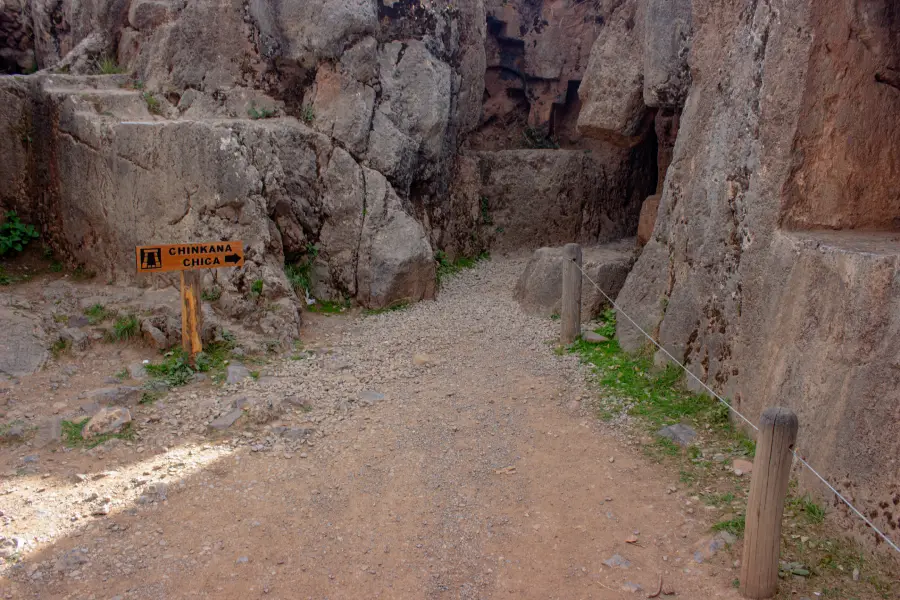
The area contains stone structures, carved rocks, passages, and formations that have been documented for decades. In fact, historical photographic records held by Peru’s former National Institute of Culture include images specifically identified as “La Chingana” and describe a passage and an entrance to the Chingana at Sacsayhuamán.
This is an important distinction.
The Chinkana is not simply a modern story created around an unexplored cave. There are documented structures and passages associated with the name at Sacsayhuamán. What remains much more difficult to establish is the full extent, purpose, and possible connections of the underground spaces.
The Chinkana Grande and Chinkana Chica
Traditionally, references to the Chinkanas around Cusco distinguish between two areas commonly known as the Chinkana Grande and the Chinkana Chica.
Chinkana Grande
The Chinkana Grande is associated with the upper area of Sacsayhuamán and has become the focus of some of the most persistent stories about an extensive underground labyrinth.
Local traditions have described passages extending deep beneath the landscape, sometimes connecting important locations within Cusco.
These stories have contributed to the Chinkana’s reputation as one of the city’s great archaeological mysteries.
However, the exact extent of any underground network should be treated carefully. Contemporary investigations are still working to determine what lies beneath the surface and how different underground anomalies may relate to one another.
Chinkana Chica
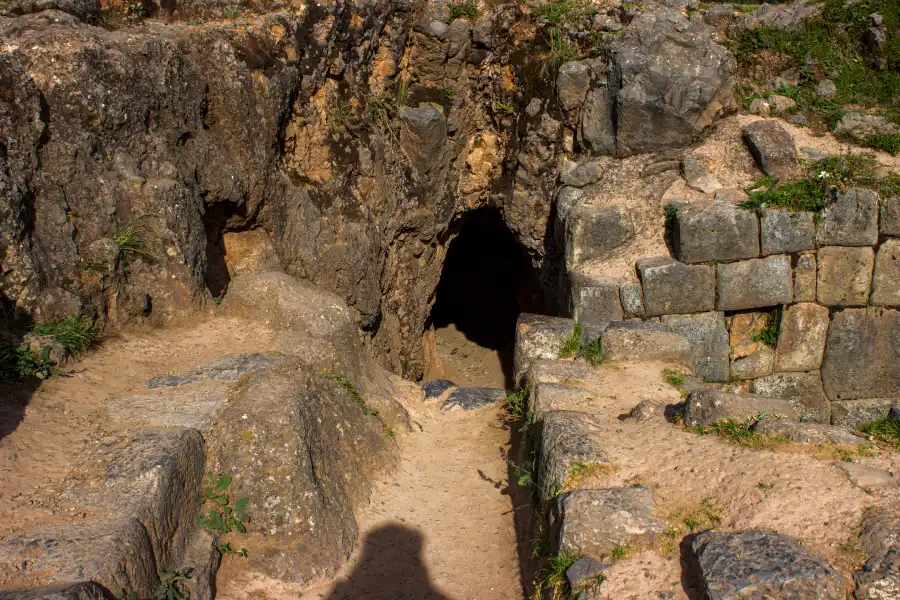
The Chinkana Chica, or Small Chinkana, is a smaller and more accessible passage associated with the Sacsayhuamán archaeological area.
Its stone passageways provide visitors with a more tangible impression of why the Chinkana became such an important part of Cusco’s traditions.
Rather than imagining the Chinkana only as a legendary tunnel stretching beneath the Andes, seeing one of these passages helps place the stories within the physical landscape where they originated.
What Do the Inca Chinkana Tunnels Look Like?
The passages associated with the Chinkana are very different from the monumental stone walls that usually define the image of Sacsayhuamán.
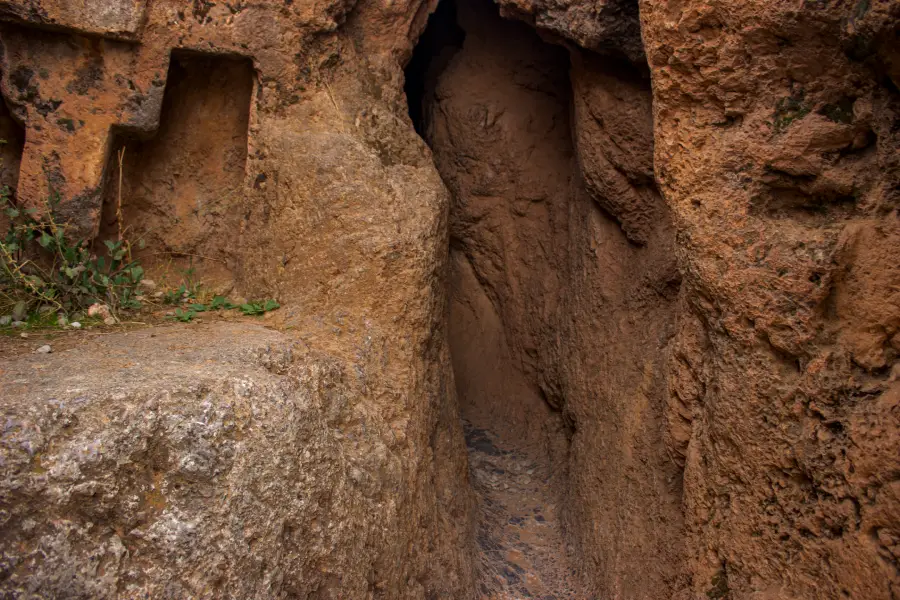
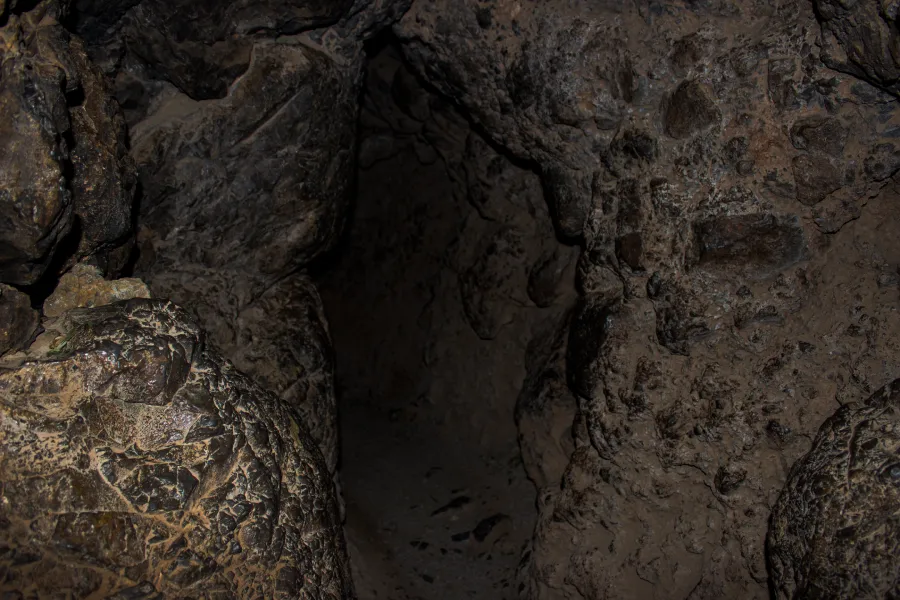
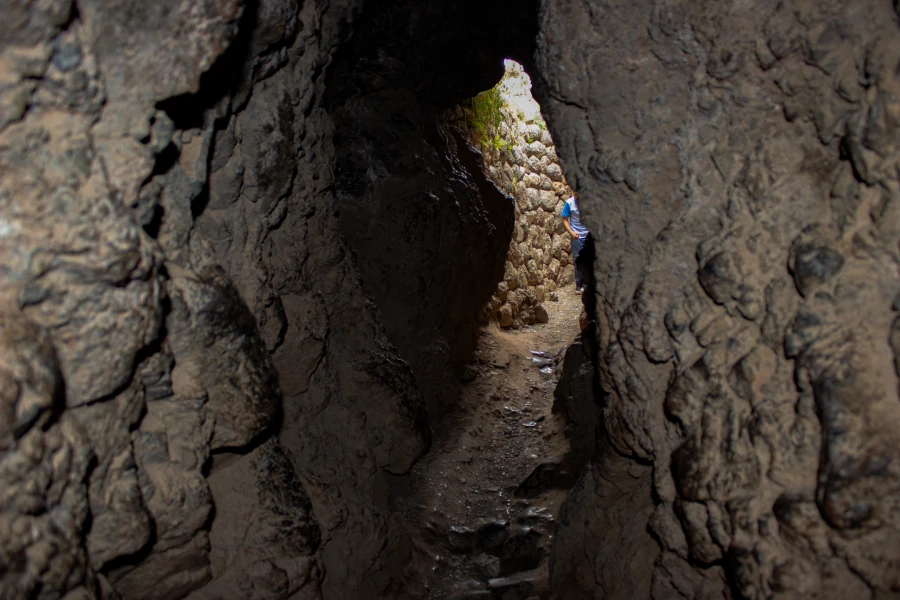
They are narrower, darker, and enclosed by rock and carefully placed stone.
For someone standing inside one of these passages, the experience can be striking: the imposing scale of Sacsayhuamán above ground gives way to a confined underground environment where visibility is limited and the surrounding stone dominates the space.
This contrast is part of what makes the Chinkana so fascinating.
It also helps explain why stories of people becoming lost underground became such a persistent part of Cusco’s oral tradition.
A Walk Through Chinkana Chica
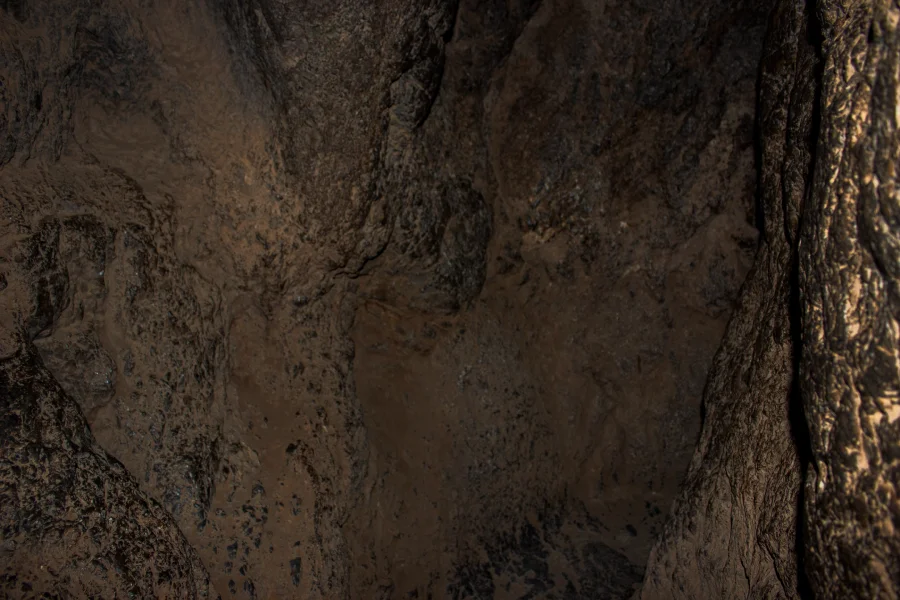
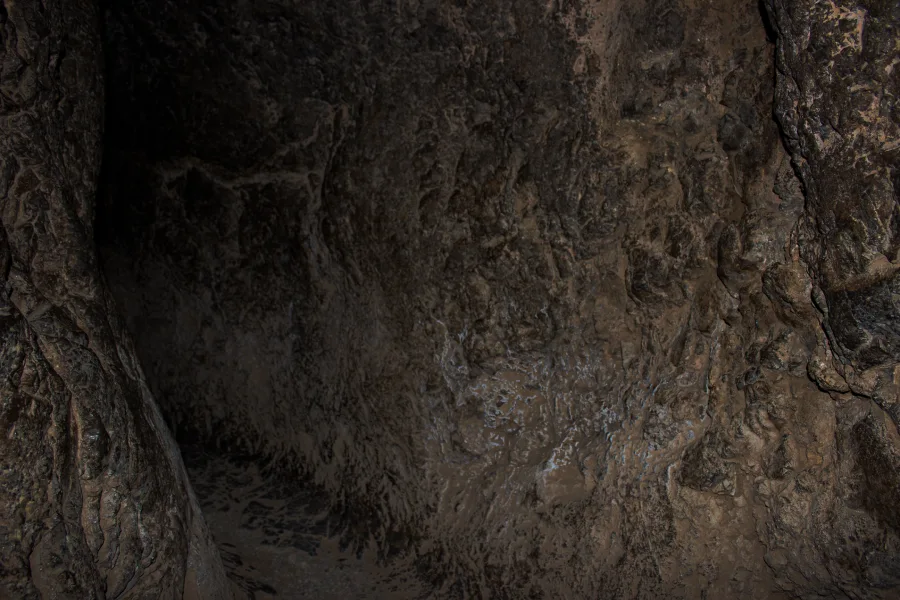
Entering Chinkana Chica is a very different experience from seeing the monumental walls of Sacsayhuamán above ground. The passage quickly narrows, the rock surrounds the path, and natural light gradually disappears. These photographs follow the passage from its entrance toward the darker interior and back toward the light.
The Chinkana and the Sacred Landscape of Cusco
The mystery of the Chinkana becomes even more interesting when viewed within the broader symbolic landscape of the Inca capital.
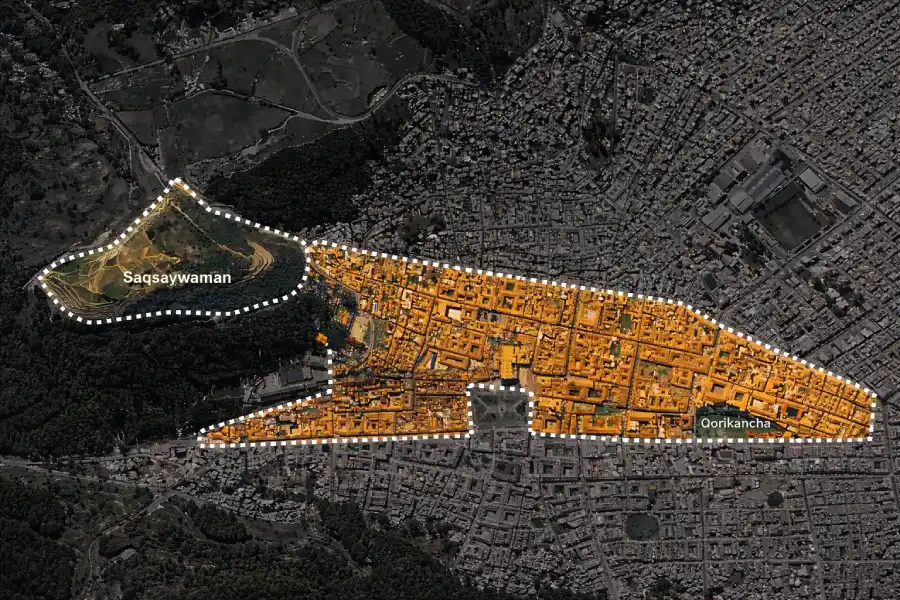
Cusco was not simply a collection of buildings. Under Inca rule, it developed as a carefully organized political, administrative, and religious centre. Its architecture and urban layout reflected the importance of sacred spaces and the relationship between the city, its rulers, and the Andean worldview.
Among the most important places was Qorikancha, the Temple of the Sun, which UNESCO identifies as one of the principal surviving elements of the Inca imperial city.
This is where the Chinkana stories become particularly intriguing.
Sacsayhuamán and Qorikancha
According to the traditions surrounding the Chinkana, underground routes may have connected Sacsayhuamán, at the upper part of the ancient city, with Qorikancha and other important locations.
The 2025 Cuarto Poder report presented archaeological investigations in which geophysical techniques were used to identify underground anomalies and explore the possibility of an extensive subterranean system. The report described a possible route between the Sacsayhuamán area and Qorikancha.
However, this should be understood as an area of ongoing investigation rather than a universally established archaeological fact.
That distinction is essential when discussing the Chinkana.
Do the Chinkana Tunnels Really Connect Sacsayhuamán and Qorikancha?
This is perhaps the most fascinating question surrounding the Inca Chinkana in Cusco.
Stories passed down through generations describe underground routes linking important sacred and political spaces. More recent research has attempted to investigate whether physical structures beneath Cusco could support some of these traditions.
The 2025 report by América Noticias described geophysical studies, including radar and electrical-resistivity techniques, that researchers say identified underground cavities and possible routes beneath the modern city.
But there is an important difference between detecting an underground anomaly and proving exactly what that structure was, when it was built, and whether it formed part of a continuous tunnel connecting two distant locations.
For that reason, the possible connection between Sacsayhuamán and Qorikancha should currently be presented as a subject of archaeological investigation, not simply as a proven Inca tunnel.
The Legends Behind the Inca Chinkana
Long before recent archaeological investigations brought renewed attention to the Chinkana, stories of underground passages beneath Cusco had already formed part of the city’s oral tradition.
For generations, local stories have described hidden routes beneath Sacsayhuamán, lost travelers, secret entrances, and connections between important places in the ancient capital. Some accounts even speak of treasures hidden beneath the city.
These stories are an important part of the cultural history surrounding the Chinkana, but they should be understood as oral traditions and legends rather than archaeological evidence.
Stories of Travelers Who Became Lost
One of the most persistent traditions tells of people who entered the underground passages and became lost inside.
According to versions of the story preserved in Cusco’s oral tradition, some explorers wandered through the labyrinth for what seemed like a short time, only to emerge much later and discover that years had passed.
Other versions tell of travelers who eventually found an exit far from where they had entered.
These stories helped give the Chinkana its enduring reputation as a place where the boundaries between the known and unknown seemed to disappear.
The idea also reflects the meaning traditionally associated with the word Chinkana: a labyrinth or a place where one can become lost.
The Legend of the Golden Ear of Corn
Perhaps one of the most memorable stories connected with the Chinkana tells of a traveler who entered the underground passages in search of a way through the ancient labyrinth.
According to the legend, after becoming lost underground, the traveler eventually emerged inside a sacred area of colonial Cusco carrying a golden ear of corn.
The story became part of the larger tradition of hidden Inca treasures beneath the city.
There is no archaeological evidence establishing this story as a historical event. Its importance lies instead in what it reveals about the way generations of Cusqueños imagined the underground spaces beneath their city.
Stories of Hidden Inca Treasures
The association between the Chinkana and hidden treasure also attracted adventurers and treasure hunters over the centuries.
According to the 2025 Cuarto Poder report, historical accounts and oral traditions contributed to the belief that valuable objects had been hidden beneath Cusco, encouraging attempts to locate underground passages. The investigation also describes evidence associated with earlier attempts to access or seal parts of the subterranean structures.
But the archaeological importance of the Chinkana is not dependent on finding gold.
The underground structures themselves, together with the historical information surrounding them, may provide valuable evidence for understanding how the Inca conceived and used the landscape of their capital.
What Archaeologists Are Discovering Beneath Cusco
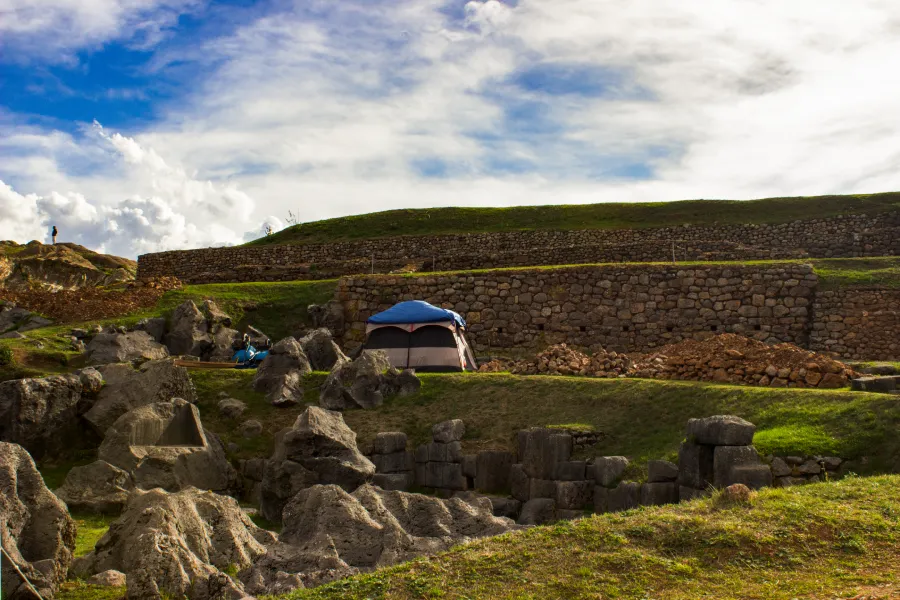
The Chinkana entered a new phase of investigation in 2025, when archaeologists began excavating areas of Sacsayhuamán associated with the possible entrance to the underground passages.
The research was led by archaeologists Jorge Calero Flores and Mildred Fernández Palomino, together with a multidisciplinary team working on the Proyecto Chinkana-Cusco. In July 2025, El Peruano reported that excavations were underway in the Sacsayhuamán archaeological park, including areas near the Suchuna sector.
The investigation is particularly significant because researchers are attempting to compare historical references, archaeological evidence, and modern geophysical studies.
Searching for the Entrance to the Chinkana
The archaeological work has focused on identifying structures that could correspond to the entrance described in historical accounts and local traditions.
According to El Peruano, researchers working in the area reported archaeological evidence beneath a stone-covered space near Suchuna and were using geophysical equipment as part of their investigation.
The 2025 Cuarto Poder report later documented researchers working inside and around subterranean spaces associated with the Chinkana. The television crew was able to record sections of the underground passage, providing a rare visual look at an area that had traditionally been difficult to access.
This is one of the reasons the 2025 investigation attracted so much attention: it brought together a story that had existed for generations with archaeological work that could potentially test parts of that tradition.
Georadar and Other Geophysical Techniques
One of the most interesting aspects of the investigation is the use of geophysical methods.
Rather than excavating the entire route through the historic city, researchers can use techniques such as ground-penetrating radar and electrical-resistivity studies to investigate what may exist below the surface.
These methods can help identify anomalies that could correspond to cavities, changes in soil or stone, or other underground structures.
The Cuarto Poder report described the use of georadar and electrical-resistivity tomography as part of the investigation into possible subterranean spaces beneath Cusco.
However, an important distinction must be made:
Detecting an underground anomaly does not, by itself, prove that it is an Inca tunnel or establish that it connects two archaeological sites.
Further archaeological investigation is necessary to determine the nature, date, function, and relationship of these structures.
From Historical Records to Archaeological Evidence
The investigation into the Chinkana is not based exclusively on modern technology.
Researchers have also examined historical documents and chronicles that contain references to underground passages associated with Cusco.
A January 2025 report by El País described the work of Jorge Calero Flores and Mildred Fernández Palomino and noted that their proposed route was based partly on historical references, including colonial-era accounts describing underground passages in the city. The same report also noted that the researchers faced skepticism and were seeking archaeological excavation as a way to test their interpretation.
This combination of sources is particularly interesting:
Historical records → oral tradition → archaeological remains → geophysical investigation
Each provides a different piece of the puzzle.
What the Researchers Are Trying to Establish
The central objective is not simply to prove that a mysterious tunnel exists.
Researchers are trying to determine:
- Where the underground structures actually begin and end.
- Whether different subterranean spaces belong to the same network.
- How the passages were constructed.
- What their original purpose may have been.
- Whether historical descriptions correspond to physical remains.
- How the underground structures relate to the wider Inca landscape of Cusco.
These questions are much more important archaeologically than the legends of hidden treasure.
A Chinkana Beneath the Head of the Puma
The investigation also connects with one of the most famous interpretations of the ancient city of Cusco: its supposed shape as a puma.
In this interpretation, Sacsayhuamán occupies the position of the animal’s head, while the urban center extends through the body of the puma toward the lower part of the city.
The Chinkana becomes particularly intriguing within this landscape because some traditions describe an underground route beginning around Sacsayhuamán and extending toward important locations in the historic center.
The 2025 investigation reported by Cuarto Poder explored a proposed underground route running from the Sacsayhuamán area toward the Qorikancha.
Whether this represents a continuous Inca tunnel remains a question for archaeological research.
What Is Known, What Is Being Investigated, and What Remains Legend?
The story of the Inca Chinkana in Cusco becomes much easier to understand when these three categories are kept separate.
| Documented or historically referenced | Under archaeological investigation | Oral tradition and legend |
|---|---|---|
| Underground structures and passages associated with Sacsayhuamán | Possible connections between subterranean spaces | Travelers becoming lost for years |
| Historical references to passages beneath Cusco | The extent of a possible underground network | Hidden Inca treasures |
| Archaeological investigations at Sacsayhuamán | Possible route toward Qorikancha | A golden ear of corn appearing after an underground journey |
| Geophysical studies identifying underground anomalies | Original function of the passages | Secret routes extending to distant places |
This distinction is essential.
The Chinkana is fascinating even without turning every legend into a fact. Archaeology, historical documents, and oral tradition together show why these underground spaces have remained part of Cusco’s cultural imagination for centuries.
Can You Visit the Inca Chinkana?
For travelers interested in the Inca Chinkana in Cusco, Sacsayhuamán is the natural place to begin.
The archaeological complex allows visitors to experience the monumental landscape in which the Chinkana traditions developed. However, that does not mean that visitors can freely enter underground passages or areas currently being investigated.
Some subterranean spaces are restricted because archaeological excavation and preservation require controlled access.
The 2025 investigation itself demonstrates why caution is necessary: researchers were working in narrow, dark and confined underground environments as part of a controlled archaeological project.
For travelers, the best way to experience the story is therefore not to search for a hidden entrance or attempt to enter restricted areas, but to explore Sacsayhuamán with a guide who can explain the archaeological landscape, historical references, and traditions surrounding the Chinkana.
Why the Chinkana Matters to Cusco
The importance of the Chinkana goes beyond the mystery of an underground labyrinth.
It represents the way archaeology, history, landscape, and oral tradition intersect in Cusco.
For generations, the stories of hidden passages survived even when many of the structures themselves were inaccessible. Now, archaeological research is providing new opportunities to investigate those traditions using methods that were unavailable to earlier generations.
The significance of the Chinkana therefore does not depend on discovering a legendary treasure.
Its greatest value may be the possibility of learning more about how the Incas shaped, understood, and used the landscape of their capital.
Exploring Cusco Beyond Its Most Famous Inca Sites
The story of the Chinkana is a reminder that Cusco offers much more than its best-known archaeological monuments.
Sacsayhuamán, Qorikancha, Qenqo, and the historic center each reveal a different part of the city’s past. Together, they help travelers understand Cusco not simply as a gateway to Machu Picchu, but as an ancient Andean capital where history remains part of the living landscape.
For travelers fascinated by the Inca Chinkana in Cusco, exploring these places with an expert guide offers an opportunity to look beyond the visible stones and understand the traditions, historical records, and archaeological research that continue to shape our understanding of the ancient city.
Frequently Asked Questions About the Inca Chinkana
-
What does Chinkana mean in Quechua?
Chinkana is commonly associated with the idea of a labyrinth or a place where one can become lost, a name that fits the maze-like passages described in Cusco’s traditions.
-
Where is the Inca Chinkana located?
The Chinkana is most strongly associated with the Sacsayhuamán archaeological area above Cusco, although traditions and ongoing research discuss possible underground structures extending toward other parts of the historic city.
-
Does the Chinkana connect Sacsayhuamán with Qorikancha?
Researchers have proposed a possible underground connection between Sacsayhuamán and Qorikancha. Geophysical studies and archaeological investigations have been used to investigate this possibility, but the full extent and continuity of the proposed network should still be described as a subject of research.
-
What is the Chinkana Grande?
The Chinkana Grande is the name traditionally associated with the larger and more mysterious Chinkana area near Sacsayhuamán. It is particularly connected with stories of an extensive underground labyrinth.
-
What is the Chinkana Chica?
The Chinkana Chica, or Small Chinkana, refers to a smaller passage associated with the Sacsayhuamán archaeological area and provides a more accessible example of the underground spaces connected with Chinkana traditions.
-
Can tourists enter the Chinkana tunnels?
Visitors should not enter restricted or closed archaeological areas. Access to underground spaces depends on archaeological and conservation regulations, so travelers should follow the instructions of site authorities and guides.
-
Is the Chinkana a legend or a real archaeological site?
It is best understood as both a documented archaeological subject and a rich body of oral tradition. Archaeological structures and historical references exist, while claims about the full extent of the underground network and some of its legendary stories require different levels of evidence.
-
Is there Inca treasure inside the Chinkana?
Stories about hidden Inca treasure are part of the Chinkana’s legends. They should not be presented as established archaeological fact. The archaeological value of the Chinkana lies in its structures, historical context, and the possibility of learning more about the ancient city.
Final Thoughts
The Inca Chinkana in Cusco remains fascinating precisely because its story is not yet completely finished.
Some elements belong to the archaeological record. Others come from historical documents and generations of oral tradition. And modern researchers are now investigating whether some of the stories correspond to a larger network of subterranean structures beneath the ancient capital.
Perhaps the most interesting part is not knowing every answer.
It is realizing that, centuries after the Inca Empire disappeared as a political power, Cusco still has stories beneath its streets, stones, and archaeological sites waiting to be understood.
For travelers, the Chinkana offers another way to look at Sacsayhuamán: not simply as an impressive monument above ground, but as part of a much larger cultural landscape whose history continues to be investigated.