
High altitude trekking in Peru takes you into landscapes that are extraordinary and environments where your body has to work differently.
From the Inca Trail and Salkantay Trek to Ausangate and other high-Andean routes, hikers can spend hours above 3,000 meters (9,840 feet), with some passes reaching well above 4,000 meters (13,100 feet).
At these elevations, the percentage of oxygen in the air does not suddenly disappear. Instead, atmospheric pressure falls, reducing the partial pressure of oxygen available to your lungs. Your body responds immediately by breathing faster and increasing your heart rate. With enough time, it begins a more complex process of acclimatization.
Understanding these changes can help you prepare better, recognize the early signs of altitude illness, and make safer decisions on the trail.
Important: This article provides general educational information about altitude and trekking safety. It is not a substitute for medical advice. Travelers with heart, lung, blood, blood-pressure or other medical conditions should discuss high-altitude travel with a qualified healthcare professional before their trip.
Table of Contents
Why Is High Altitude Different From Sea Level?
The first thing to understand about high altitude is that the air does not contain dramatically less oxygen by percentage.
Oxygen continues to make up approximately 21% of the atmosphere. The important change is atmospheric pressure.
As altitude increases, barometric pressure decreases. Because oxygen makes up a fixed proportion of the atmosphere, its partial pressure also decreases. That means each breath provides less oxygen pressure for the process that moves oxygen from the lungs into the bloodstream.
At around 4,000 meters (13,100 feet), atmospheric pressure is roughly 60% of its value at sea level under standard atmospheric conditions. Consequently, the partial pressure of inspired oxygen is also substantially lower.
This is what scientists call hypobaric hypoxia: lower atmospheric pressure results in lower oxygen availability to the body.
The oxygen percentage is still about 21%
A common misconception is that the air at 4,000 meters contains only half as much oxygen.
That is not quite correct.
The concentration of oxygen remains approximately 21%. What changes is the pressure pushing those oxygen molecules into your lungs.
Think of it this way:
- At sea level, atmospheric pressure is higher.
- At high altitude, atmospheric pressure is lower.
- Oxygen therefore has a lower partial pressure.
- Your lungs have a smaller pressure gradient available for oxygen transfer.
- Your body must compensate.
This distinction is important because it explains why altitude affects even healthy and physically fit hikers.
What Happens to Your Body as You Gain Altitude?
Your body does not simply “run out of oxygen” when you climb.
Instead, it begins a series of physiological responses designed to maintain oxygen delivery to your tissues.
Some responses occur within minutes. Others develop over several days.
Your breathing increases
One of the earliest responses to altitude is an increase in ventilation.
Specialized sensors in your body detect the lower oxygen availability and stimulate your respiratory system. You begin breathing faster and often more deeply.
This helps bring more air into the lungs and improves oxygen uptake.
However, increased ventilation also causes you to exhale more carbon dioxide. This changes the body’s acid-base balance and triggers additional physiological responses.
The increased breathing is one reason a normal walk at altitude can feel surprisingly demanding compared with the same effort at sea level.
Your heart rate increases
Your cardiovascular system also responds.
Because each unit of blood may carry less oxygen than it would at sea level, your body can compensate partly by circulating blood more rapidly.
Heart rate and cardiac output can increase, particularly during physical activity.
This is why you may notice that your heart is beating faster even when you are walking at a relatively comfortable pace.
Exercise becomes harder
High altitude reduces aerobic performance.
The combination of lower oxygen pressure and the body’s compensatory responses means that exercise can require more ventilation and cardiovascular effort.
A pace that feels easy at sea level may feel noticeably harder in Cusco or on a high mountain pass.
This is not necessarily a sign that you are unfit.
It is part of the physiological challenge of altitude.
What Happens to Your Body Above 4,000 Meters?
Reaching 4,000 meters is an important milestone for hikers because the physiological stress of altitude becomes more pronounced.
But it is important to understand that 4,000 meters is not a medical switch.
Altitude illness can occur at lower elevations, particularly above approximately 2,500 meters in people who are not acclimatized. Individual responses vary considerably.
At 4,000 meters, however, the reduction in oxygen availability is substantial enough that an unacclimatized traveler may notice significant changes in breathing, exercise capacity, sleep and overall comfort.
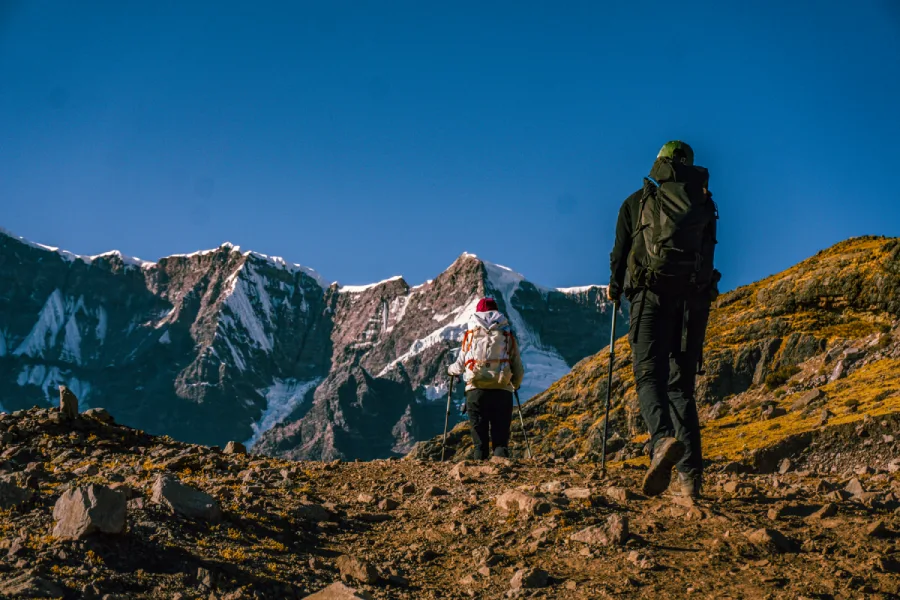
Your breathing may feel noticeably different
At this elevation, your body is working harder to obtain oxygen.
You may find yourself taking more frequent breaths, especially while climbing.
During a steep ascent, you may need to slow your pace simply to allow your respiratory and cardiovascular systems to keep up with the demands of the terrain.
Your physical performance decreases
High altitude reduces your maximum aerobic capacity.
This means that even a strong athlete cannot simply assume that excellent sea-level fitness will eliminate altitude-related difficulties.
Fitness helps you handle the physical demands of trekking, but fitness does not make you immune to altitude illness.
The CDC and Banner Health both emphasize that altitude illness can affect people regardless of fitness or previous experience.
Sleep can become more difficult
Altitude can also affect breathing during sleep.
Some travelers experience periodic breathing or disrupted sleep after ascending to higher elevations. Poor sleep can then contribute to fatigue the following day.
This is one reason why acclimatization should not be measured only by how you feel during a daytime hike.
Your sleeping altitude matters too.
High Altitude Acclimatization: How Does Your Body Adapt?
Acclimatization is the process through which your body gradually adjusts to prolonged exposure to lower oxygen availability.
It takes time.
You cannot fully acclimatize simply by being physically fit before your trip, and one night at altitude does not produce the same physiological adaptation as several days.
Over time, several changes occur.
Ventilatory acclimatization
Your respiratory system becomes increasingly responsive to the lower oxygen environment.
You continue to breathe more than you would at sea level, improving oxygen intake.
Changes in circulation
Your cardiovascular system adjusts to the demands of transporting oxygen under conditions of reduced oxygen availability.
Heart rate, blood flow and other circulatory responses change during acclimatization.
Increased red blood cell production
Over longer periods, the body increases production of red blood cells through mechanisms involving erythropoietin.
This can increase the blood’s oxygen-carrying capacity.
However, this adaptation takes time. It is not something that happens during the first few hours of a trek.
Acclimatization is individual
Two hikers can follow the same itinerary and have very different experiences.
One may feel comfortable while another develops headache, fatigue or nausea.
Previous experience at altitude can provide useful information about how you have responded before, but it does not guarantee that every future ascent will feel the same.
Altitude Sickness in Peru: What Should Hikers Watch For?
Altitude sickness is a general term used for illnesses associated with exposure to high altitude.
The most common form is acute mountain sickness (AMS).
It generally develops after ascending to altitude without adequate acclimatization and commonly includes headache together with symptoms such as fatigue, dizziness, nausea or loss of appetite.
Common symptoms of acute mountain sickness
Watch for:
- Headache
- Unusual fatigue
- Dizziness
- Nausea
- Loss of appetite
- Vomiting
- Reduced ability to perform normal activity
Symptoms can begin within hours of arriving at a higher elevation.
Banner Health notes that symptoms may begin quickly after reaching a higher altitude and can worsen if a person continues ascending.
Do not confuse altitude symptoms with simply being tired
A demanding trekking day can naturally leave you tired.
The important question is whether you are experiencing symptoms that are consistent with altitude illness and whether they are getting worse.
A headache after a long day is not automatically AMS.
But a headache accompanied by nausea, dizziness or unusual fatigue after a rapid ascent deserves attention.
The safest approach is to communicate symptoms early rather than trying to hide them from your trekking group.
When Does Altitude Sickness Become an Emergency?
Most altitude illness is mild, but serious forms can be life-threatening.
Two conditions require particular attention:
- High-altitude cerebral edema (HACE)
- High-altitude pulmonary edema (HAPE)
High-altitude cerebral edema (HACE)
HACE is a severe altitude-related condition involving the brain.
Warning signs can include:
- Confusion
- Difficulty thinking clearly
- Severe drowsiness
- Loss of coordination
- Difficulty walking normally
- Changes in behavior or consciousness
These are emergency symptoms.
The CDC recommends immediate descent when HACE is suspected.
High-altitude pulmonary edema (HAPE)
HAPE affects the lungs and can progress rapidly.
Warning signs can include:
- Shortness of breath, especially at rest
- Increasing difficulty breathing
- Weakness
- Cough
- Reduced exercise tolerance
- In severe cases, respiratory distress
HAPE is potentially life-threatening and requires immediate medical attention and descent.
The most important rule: do not continue ascending with worsening symptoms
If altitude symptoms are getting worse, continuing upward is not a test of toughness.
The correct response is to stop ascending and assess the situation.
If serious symptoms develop, descent should be treated as an emergency priority.
How to Prevent Altitude Sickness While Trekking
The most effective strategy for preventing altitude illness is appropriate acclimatization and gradual ascent.
There is no training program that can completely replace acclimatization.
1. Ascend gradually
The Wilderness Medical Society recommends gradual ascent as the first priority for preventing acute altitude illness.
For people traveling above 3,000 meters, its 2024 guidance recommends increasing sleeping elevation by no more than approximately 500 meters per day and incorporating a rest day every three to four days.
The CDC similarly recommends gradual ascent and limiting increases in sleeping altitude once above approximately 2,750 meters.
Your exact itinerary matters because two routes with the same maximum altitude can have very different acclimatization profiles.
2. Spend time acclimatizing before a high trek
If you are arriving from a low-altitude location, spending time at an intermediate elevation before starting a demanding trek can give your body an opportunity to begin adapting.
This is particularly relevant in Peru, where travelers can move from sea-level Lima to Cusco at approximately 3,400 meters in a relatively short period.
The Bellvitge travel-health discussion also emphasizes planning the itinerary around altitude and allowing progressive acclimatization rather than making abrupt changes in elevation.
3. Do not race through the first days
Your first day at altitude is not the time to prove how fast you can hike.
Walk at a sustainable pace.
Allow your breathing to settle.
Take appropriate breaks.
Pay attention to how you feel.
A slower first day can be much more valuable than trying to maintain your normal sea-level pace.
4. Avoid alcohol during initial acclimatization
Alcohol can interfere with sleep and may worsen some symptoms associated with altitude exposure.
The CDC recommends avoiding alcohol during the first 48 hours after arriving above approximately 2,500 meters.
5. Hydrate normally
Hydration is important during trekking, especially in dry mountain environments.
But drinking excessive amounts of water does not “flush out” altitude sickness.
Drink according to thirst and activity, replace fluids lost through exercise, and pay attention to your body’s needs.
6. Eat enough to support the effort
Trekking at altitude requires energy.
Meals containing carbohydrates can provide a readily available energy source for demanding physical activity.
More importantly, do not start a high-altitude trek under-fueled.
Your body is already working harder to adapt to the environment.
7. Do not rely on physical fitness alone
Training before your trek is valuable.
Strength, endurance and hiking-specific preparation can make the physical demands of a route much easier to manage.
But physical fitness does not eliminate the risk of acute mountain sickness.
Altitude acclimatization and physical conditioning are two different things.
What About Medication for Altitude Sickness?
Medications such as acetazolamide can be used in some circumstances to prevent or treat altitude illness.
However, medication decisions should be individualized.
The Wilderness Medical Society recognizes acetazolamide as an established option for prevention of acute mountain sickness, while the CDC recommends discussing medication choices with a healthcare professional based on your medical history and travel plans.
This is particularly important because medications can have contraindications, interactions and side effects.
For that reason, a trekking blog should not replace medical advice or provide a universal medication regimen for every traveler.
If you have previously experienced significant altitude illness or are planning a rapid ascent, discuss your itinerary with a healthcare professional before traveling.
Does Coca Tea Prevent Altitude Sickness?
Coca tea is deeply associated with Andean culture and is commonly offered to travelers in Cusco and other high-altitude destinations.
It can be a comforting traditional drink, but it should not be presented as a scientifically established treatment for acute mountain sickness.
The TV Perú report you provided specifically discusses this distinction, noting that rest rather than coca tea itself may explain why some travelers feel better after taking a break. The report also emphasizes that altitude symptoms can vary between individuals.
The important lesson is simple:
Enjoy local traditions, but do not use them as a substitute for proper acclimatization or medical care when symptoms are serious.
Trekking Above 4,000 Meters in Peru
Peru is an exceptional destination for high-altitude trekking because several major routes cross the Andes and expose travelers to very different elevation profiles.
But not every trek challenges the body in the same way. Maximum altitude, sleeping elevation, ascent rate and the amount of time available for acclimatization can all influence how your body responds.
Inca Trail
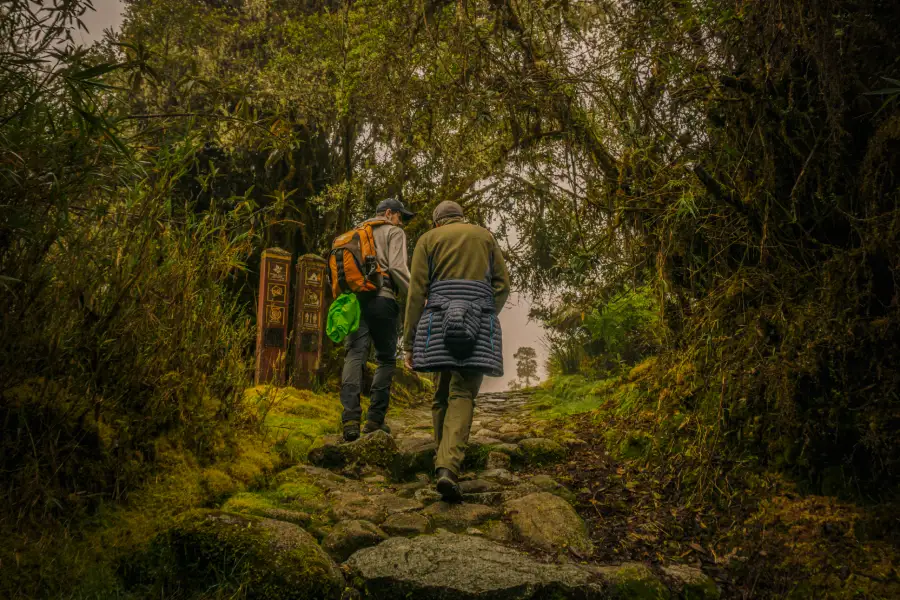
The Classic Inca Trail crosses the Warmiwañusqa pass, commonly known as Dead Woman’s Pass. The route reaches approximately 4,200 meters (13,780 feet) above sea level, making acclimatization an important part of preparing for the trek.
For travelers planning to experience this classic route, our Luxury Inca Trail 4 Days follows the classic Inca Trail to Machu Picchu and includes this significant high-altitude section.
Salkantay Trek
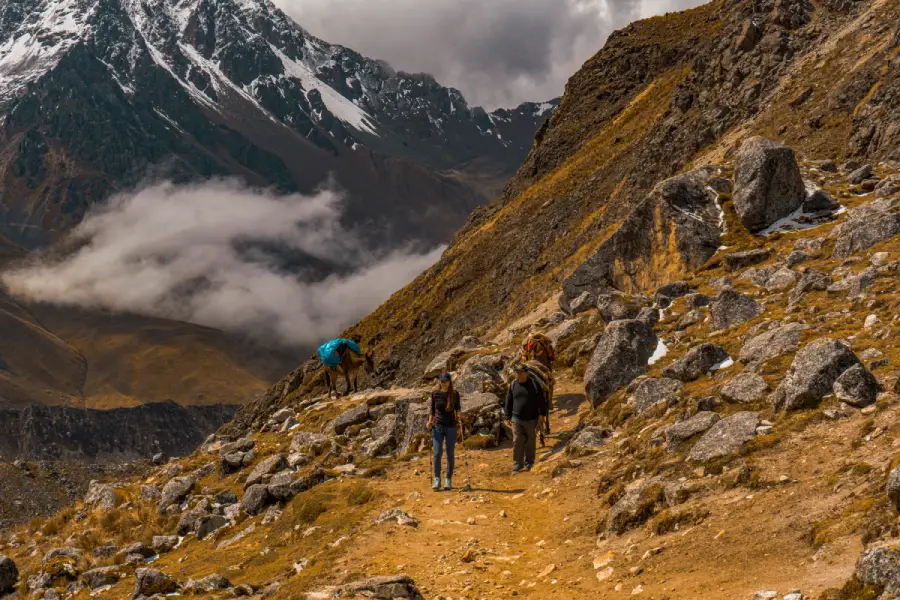
The Salkantay route reaches substantially higher elevations than the Classic Inca Trail. The route crosses some of the highest terrain in the Cusco region, making prior acclimatization particularly important.
Our Salkantay Luxury Glamping Trek 5 Days reaches approximately 4,638 meters (15,216 feet) at Salkantay Pass. At this elevation, hikers should be prepared for reduced oxygen availability and a demanding physical environment.
Ausangate Trek
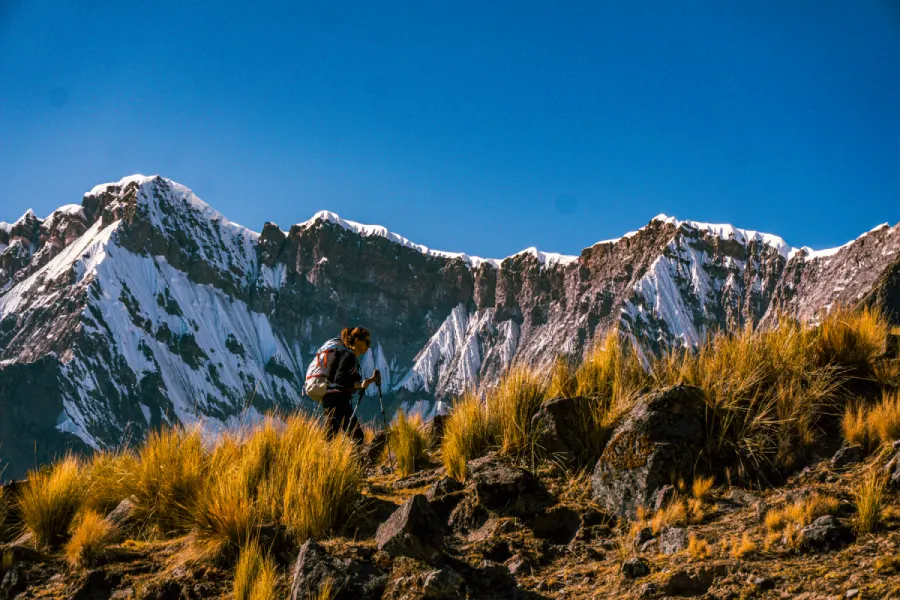
Ausangate is a more consistently high-Andean environment, with long sections of the itinerary taking place at significant elevations.
Our Ausangate Luxury Glamping Trek reaches approximately 4,800 meters (15,748 feet) at several passes and approximately 5,200 meters (17,060 feet) at Rainbow Mountain during the itinerary.
At these elevations, proper acclimatization becomes particularly important because the body is exposed to substantially lower atmospheric pressure and oxygen availability.
Lares and Other High-Andean Routes
Not every alternative route reaches the same elevation, and this is an important consideration when choosing a trek.
Sections of the Lares route can reach high elevations depending on the itinerary and pass selected. Travelers interested in this type of experience can explore our Luxury Lares Trek 4 Days, which combines high-Andean scenery with a gradual trekking experience.
For travelers looking to combine the Lares region with a section of the Inca Trail, our Luxury Lares Trek with Short Inca Trail offers another option.
Moonstone Quarry Inca Trail
High-altitude trekking in Peru extends beyond the best-known routes. The Moonstone Valley also offers a demanding Andean experience, with the route reaching significant elevation.
The Moonstone Quarry Inca Trail 5 Days reaches approximately 4,625 meters (15,174 feet) at Accoccasa Pass, making acclimatization an important consideration before beginning the trek.
Ultimately, choosing a high-altitude trek should involve more than looking at distance or the number of hiking days. Maximum altitude, sleeping altitude, ascent profile and acclimatization opportunities all matter.
Which Is Harder: Distance or Altitude?
This is a common question, and the answer is: both matter, but they challenge the body differently.
A long trek at moderate elevation may create substantial muscular fatigue.
A shorter trek with a rapid ascent to 4,000+ meters may create a greater physiological challenge from altitude.
For high-altitude trekking, consider four factors:
- Maximum elevation
- Sleeping elevation
- How quickly you gain altitude
- How many days you have to acclimatize
This is why two trekking itineraries with similar distances can feel completely different.
How Should You Prepare for High-Altitude Trekking in Peru?
Good preparation starts before you arrive in the Andes.
Before your trip
Consider:
- Building cardiovascular endurance
- Training on hills or stairs
- Practicing with the backpack you will actually use
- Strengthening your legs and core
- Getting accustomed to long walking days
- Planning your acclimatization days
- Reviewing the elevation profile of your route
- Discussing medical concerns with your doctor
When you arrive in Peru
If you are coming from low altitude:
- Give yourself time to acclimatize.
- Avoid immediately scheduling the hardest trek.
- Keep your first activities relatively easy.
- Sleep adequately.
- Avoid alcohol during the initial acclimatization period.
- Monitor how your body responds.
During the trek
Your priorities should be:
Pace → breathing → hydration → nutrition → symptoms → communication
If something feels wrong, tell your guide or trekking team.
Early communication is safer than waiting until symptoms become severe.
Why Your Trekking Itinerary Matters
Altitude safety is not simply about reaching a maximum elevation.
It is about how you get there.
Imagine two itineraries:
Itinerary A
Sea level → 4,000 m in one day → strenuous hike.
Itinerary B
Lower altitude → intermediate altitude → acclimatization days → gradual ascent → high pass.
The second profile generally gives the body more time to adapt.
The Wilderness Medical Society identifies gradual ascent as the first priority in reducing the risk of acute altitude illness.
This is one reason experienced trekking operators pay attention not only to the destination, but to the complete elevation profile of the journey.
A Simple Altitude Safety Checklist for Hikers
Before starting a high-altitude trek, ask yourself:
- Have I spent enough time acclimatizing?
- Do I know the highest point of my route?
- Do I know where I will sleep each night?
- How quickly does the itinerary gain elevation?
- Have I discussed relevant medical conditions with my doctor?
- Do I know the early symptoms of altitude illness?
- Do I know what symptoms require immediate descent?
- Does my trekking operator have an emergency plan?
- Do I have appropriate travel insurance?
- Have I told someone if I am feeling unwell?
Being prepared does not mean expecting something to go wrong.
It means knowing what to do if it does.
High Altitude Trekking in Peru: The Key Takeaway
Your body is remarkably good at adapting to challenging environments—but it needs time.
Above 4,000 meters, the lower atmospheric pressure means significantly less oxygen pressure is available with each breath. Your breathing increases, your heart works harder, exercise becomes more demanding, and your body begins a process of acclimatization.
The most important lesson is that altitude illness is not a test of fitness or willpower.
A highly trained athlete can experience altitude sickness, while a less experienced hiker may acclimatize well.
What matters is the combination of altitude, ascent rate, sleeping elevation, acclimatization and individual response.
For travelers planning the Inca Trail, Salkantay, Ausangate or another high-Andean adventure, the safest approach is to understand your itinerary before you start, allow your body time to adapt, recognize symptoms early and never continue ascending when serious symptoms are developing.
The Andes are meant to be experienced with respect.
And the better you understand how your body responds to altitude, the better prepared you are to enjoy the journey.
Frequently Asked Questions About High Altitude Trekking in Peru
-
At what altitude can altitude sickness begin?
Altitude sickness can occur at elevations above approximately 2,500 meters (8,200 feet), particularly when someone ascends rapidly without enough time to acclimatize. It does not affect everyone in the same way, and physical fitness does not guarantee protection. Symptoms commonly include headache, fatigue, dizziness, nausea and loss of appetite.
-
Is 4,000 meters dangerous for everyone?
No. Reaching 4,000 meters (13,100 feet) does not automatically mean that you will develop altitude sickness. However, the atmospheric pressure and oxygen availability are significantly lower than at sea level, placing greater demands on the body. Proper acclimatization, a gradual ascent and attention to symptoms are especially important at this elevation.
-
Can I get altitude sickness even if I am physically fit?
Yes. Physical fitness does not prevent altitude sickness. Even experienced hikers and highly trained athletes can develop symptoms because altitude illness is primarily related to how an individual’s body responds to reduced oxygen availability and how quickly they ascend. Being fit can help you manage the physical demands of trekking, but it does not replace acclimatization.
-
How long does it take to acclimatize to high altitude?
Acclimatization is a gradual process that develops over several days and varies from person to person. The higher you travel, the more important it becomes to allow your body enough time to adapt. Above approximately 3,000 meters, gradual increases in sleeping altitude and regular rest days can help reduce the risk of acute altitude illness.
-
Is the Inca Trail above 4,000 meters?
Yes. The Classic Inca Trail reaches approximately 4,200 meters (13,780 feet) at Warmiwañusqa, commonly known as Dead Woman’s Pass. This is the highest point of the classic route, making acclimatization an important part of preparing for the trek.
-
What should I do if I get altitude sickness while trekking?
If you develop symptoms of altitude sickness, do not continue ascending. Stop and rest while monitoring your symptoms and inform your guide or trekking team. If symptoms worsen or serious signs such as confusion, difficulty walking, severe shortness of breath or other neurological or respiratory problems appear, you should descend to a lower altitude and seek medical attention immediately.
Plan Your High Altitude Trek in Peru With Preparation in Mind
Whether you are considering the Classic Inca Trail, Salkantay, Ausangate or another route through the Andes, altitude should be part of your trip planning—not an afterthought.
Explore our luxury trekking tours in Peru and compare different routes, elevations and trekking experiences before choosing the adventure that best matches your travel plans.
At Glamping Inca Trail Tours, we help travelers explore Peru’s high Andean landscapes through carefully planned trekking experiences.
Medical Sources and Further Reading
- Centers for Disease Control and Prevention (CDC), Travel to High Altitudes.
- Wilderness Medical Society, Clinical Practice Guidelines for the Prevention, Diagnosis, and Treatment of Acute Altitude Illness: 2024 Update.
- Banner Health, Tips for Safely Traveling to High Altitude and Preventing Altitude Sickness, February 10, 2025.
- Hospital Universitari de Bellvitge, travel-health educational material provided as a reference for this article.
- Ministerio de Cultura del Perú / MINCETUR, information on the Classic Inca Trail and Warmiwañusqa.
Medical disclaimer: The information in this article is intended for general educational purposes and does not constitute medical diagnosis or treatment. If you have a medical condition, take prescription medication, are pregnant, or have previously experienced significant altitude illness, consult a qualified healthcare professional before traveling to high altitude.
Really interesting article! I’m planning a trek in Peru, and I honestly didn’t realize how much altitude can affect the body even if you’re in good physical shape. The section about acclimatization was especially useful. Definitely something I’ll keep in mind before heading into the Andes!