
Every June, Cusco becomes the setting for Inti Raymi, one of Peru’s most important celebrations of Inca heritage. Music, traditional clothing, ceremonial performances, and historic places come together in an event that connects modern Cusco with its ancient past.
But today’s celebration tells only part of the story.
Centuries ago, Intip Raymi was the most solemn of the four principal festivals celebrated by the Inca rulers in Cusco. In his Comentarios Reales de los Incas, Inca Garcilaso de la Vega describes it as a celebration dedicated to the Sun, held after the June solstice.
The ceremony later disappeared as a public Inca celebration during the colonial period. Centuries afterward, it was revived in Cusco in 1944, beginning the modern chapter of its history.
To understand Inti Raymi today, we need to look at both stories: the ancient ceremony and the modern celebration that emerged from its historical memory.
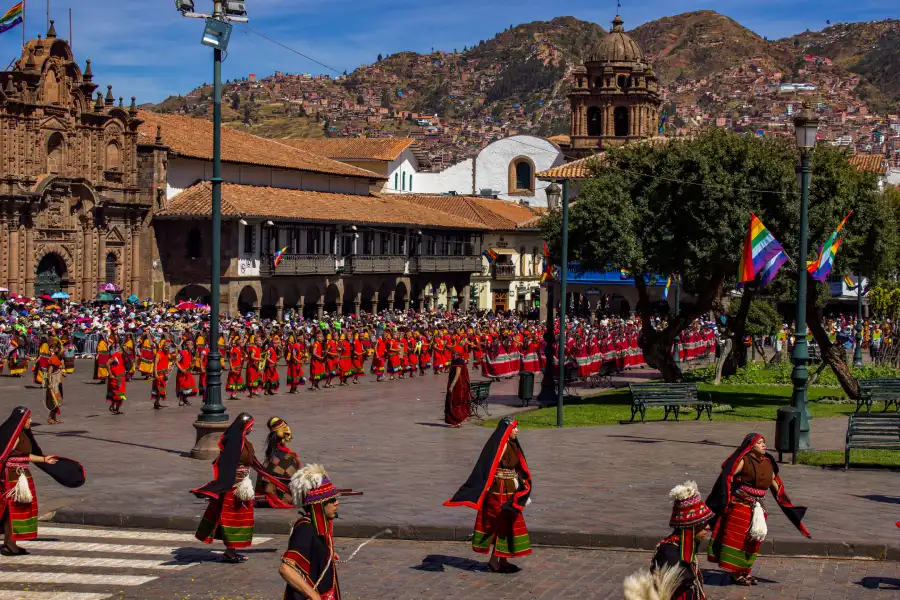
Table of Contents
What Is Inti Raymi?
Inti Raymi was the solemn festival dedicated to the Sun in the Inca world.
Garcilaso explains that Raymi referred to a solemn feast and that Intip Raymi was the principal celebration dedicated to the Sun. Among the four major festivals held by the Inca rulers in Cusco, this was considered the most solemn and was celebrated after the June solstice.
For the Incas, the Sun held a central place in their religious worldview. Garcilaso records that they honored it as the divine force whose light and power created and sustained life on earth. He also describes the Sun as the natural father of Manco Cápac, Mama Ocllo, and the Inca rulers.
That context helps explain why Inti Raymi was much more than a seasonal celebration. It was closely connected with religion, the Inca ruler, and the ceremonial life of Cusco.
What Does “Inti Raymi” Mean?
The name reflects the central purpose of the celebration.
Inti refers to the Sun, while Raymi refers to a solemn feast. Garcilaso specifically identifies Intip Raymi as the solemn feast of the Sun.
So, in its historical context, Inti Raymi can be understood as the solemn celebration dedicated to the Sun.
Why Was the Sun So Important to the Incas?
The Sun was central to the Inca religious worldview described by Garcilaso.
He explains that the Incas worshipped the Sun because they believed its light and power created and sustained the things of the earth. They also considered it the father of their first rulers and their descendants.
This explains the exceptional importance of Inti Raymi: honoring the Sun was also closely connected with the sacred status of the Inca ruler.
When Was Inti Raymi Celebrated?
The historical Intip Raymi was celebrated after the June solstice, according to Garcilaso.
The modern public celebration takes place on June 24 in Cusco, but the two should not be confused. The date and format of today’s event belong to the modern representation of Inti Raymi, while Garcilaso’s account describes the historical Inca ceremony.
That distinction will become important as we follow the story from the Inca period to the celebration seen in Cusco today.
Inti Raymi History: From the Inca Empire to Modern Cusco
Long before becoming a symbol of Cusco’s cultural heritage, Inti Raymi was the most solemn of the four principal festivals celebrated by the Inca rulers in Cusco.
Garcilaso de la Vega describes the Intip Raymi as a celebration held after the June solstice to honor the Sun, whom the Incas regarded as a supreme divine force and as the father of their rulers.
Its importance was also reflected in those who attended. Garcilaso records the presence of senior military leaders, curacas and lords from across the Empire, as well as the Inca himself. Those unable to travel could send members of their families to represent them.
This made Inti Raymi more than a religious celebration. Cusco became a meeting point for political authority, religious tradition, and representatives from across the Inca world.
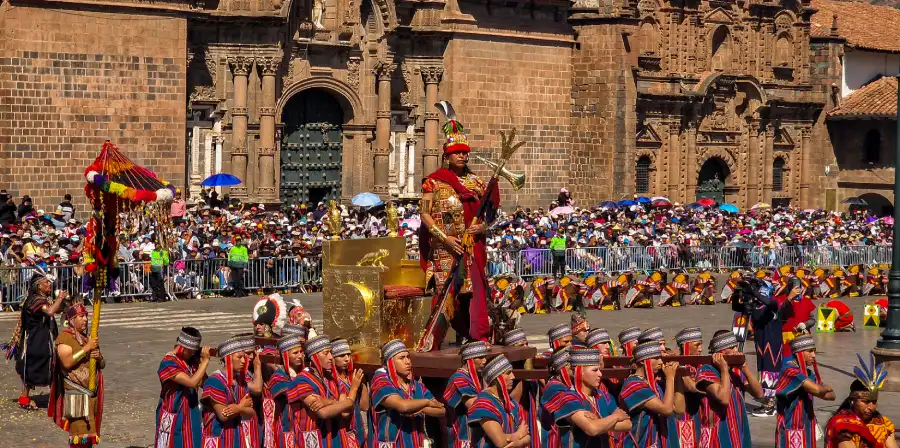
How Was Inti Raymi Celebrated in Inca Times?
The celebration extended far beyond a single ceremony.
Garcilaso describes nine days of festivities, with the main divination ceremonies taking place on the first day. After the nine days, the curacas returned to their territories.
Music, dancing, food, and drink were also part of the celebration. Garcilaso describes different groups participating with their own dances, songs, symbols, and traditions, while the Inca and other members of the royal lineage took part in the festivities.
The ceremony also had a strong connection with Cusco itself. Garcilaso records that the principal sacrifices associated with the Raymi took place in the main square of the city, while other ceremonial activities took place near the Temple of the Sun.
The historical Inti Raymi was therefore a large, carefully organized celebration that combined religion, ceremony, community, and royal authority.
And this is important when looking at the modern celebration: what visitors see today is inspired by this historical tradition, but it belongs to a very different historical context.
Inti Raymi and the Turning Point of the Colonial Period
The arrival of the Spanish transformed the religious and political world in which Inti Raymi had existed.
The Inca ceremony had been closely connected to the Sun, the Inca ruler, the religious authorities, and the ceremonial life of Cusco. With the establishment of the colonial system, these traditions faced a very different religious and political environment.
According to the report by anthropologist Eldy Flores, the process of evangelization sought to restrict Indigenous religious celebrations, particularly those connected with pre-Hispanic beliefs.
Inti Raymi was one of the traditions affected by this transformation.
The Spanish Conquest and the Transformation of Andean Traditions
The colonial period did not simply replace one culture with another overnight.
As Eldy Flores explains, Indigenous cultural elements continued to persist and, in some cases, became intertwined with Catholic traditions. This process contributed to the syncretism visible in many Cusqueño celebrations today.
This distinction is important:
The original Inca ceremony was interrupted, but elements of Andean culture continued to survive and evolve.
The Prohibition of Inti Raymi in 1572
A decisive moment came in 1572, when Viceroy Francisco de Toledo prohibited Inti Raymi as part of the colonial efforts to suppress Indigenous religious practices.
This marked a major break in the history of the celebration.
The public ceremony described by Garcilaso belonged to the Inca ceremonial world; after the colonial transformation, it could no longer occupy the same official place in Cusco.
Garcilaso himself provides an important historical observation. He wrote that when he was born, the Raymi was already over as a celebration, although he remembered seeing older Indigenous people carrying out other ritual practices during his childhood.
That observation helps us understand that the historical ceremony had already disappeared from public life by Garcilaso’s time.
Did the Tradition Truly Disappear?
This is where the story becomes more nuanced.
We should not claim that Inti Raymi continued secretly and unchanged for centuries. The available sources do not support that conclusion.
What we can say is that elements of Andean religious and cultural traditions persisted despite colonial transformation.
The report describes this process as a form of cultural syncretism, in which Indigenous elements continued within new religious and cultural expressions.
So the history is not simply:
Inti Raymi existed → it was prohibited → everything disappeared.
It is closer to:
Inca ceremony → colonial interruption → transformation of Andean traditions → survival of cultural memory → modern revival.
That distinction will become essential when we reach 1944, because the modern Inti Raymi was not an uninterrupted continuation of the original ceremony.
The Revival of Inti Raymi in 1944
After centuries of interruption, Inti Raymi returned to Cusco on June 24, 1944, beginning a new chapter in the history of the celebration.
According to the report by anthropologist Eldy Flores, the modern revival was initiated by Humberto Vidal Unda, a member of the Instituto Americano de Arte. He developed the script together with Faustino Espinoza, who portrayed the first Inca.
The event was not a continuation of the original ceremony in an uninterrupted sense. It was a modern representation inspired by historical accounts of the Inca celebration.
This distinction is important: the Inti Raymi of 1944 marked the recovery of a cultural memory that had been absent from public celebration for centuries.
Humberto Vidal Unda and Faustino Espinoza
The 1944 revival required transforming historical information into a representation that could be performed for a contemporary audience.
According to the report, Vidal Unda and Espinoza used the chronicles of Inca Garcilaso de la Vega as an important reference when developing the script.
Their work gave physical form to a celebration that had previously existed mainly through historical memory and written accounts.
The result was not intended to reproduce every detail of the ancient ceremony exactly. Instead, it created a new public representation through which Cusco could reconnect with its Inca heritage.
The Role of Garcilaso de la Vega in the 1944 Revival
This connection with Garcilaso gives the history of Inti Raymi a remarkable continuity.
Centuries earlier, Garcilaso had recorded the Intip Raymi as the most solemn of the principal festivals celebrated by the Inca rulers in Cusco, describing its connection with the Sun and its ceremonial importance.
According to the report, his chronicles were later consulted in the creation of the 1944 representation.
In other words:
Garcilaso recorded the historical ceremony → the public celebration disappeared → centuries later, his writings helped inform its modern revival.
This is one of the clearest links between the historical Inti Raymi and the celebration that Cusco presents today.
From 1944 to the Modern Celebration
The 1944 revival was only the beginning of the modern Inti Raymi.
Over the following decades, the celebration continued to change as different Cusco institutions and groups became involved in its organization and scripts. According to the report, significant changes took place during the 1970s and 1980s.
These developments eventually shaped the three-stage celebration associated with modern Cusco:
Coricancha → Plaza de Armas → Sacsayhuamán
We will look at those three stages next.
Inti Raymi in Cusco Today
Today, Inti Raymi in Cusco unfolds across three important locations:
Coricancha → Plaza de Armas → Sacsayhuamán.
Together, these stages create the structure of the modern celebration, connecting Cusco’s Inca heritage with a contemporary cultural representation.
The locations are also meaningful in their own right. Garcilaso describes Coricancha as the area associated with the Temple of the Sun, while the main square of Cusco was already an important ceremonial space during the Inca period.
The Ceremony at Coricancha
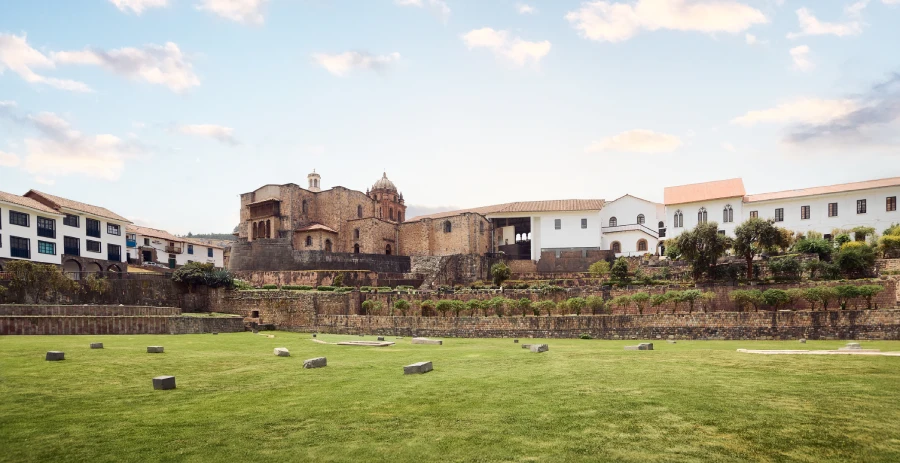
The modern celebration begins at Coricancha, the historic Temple of the Sun.
This setting establishes the connection between the modern Inti Raymi and the ancient religious world described in the chronicles. Garcilaso identifies Coricancha as the area where the Temple of the Sun stood and describes offerings being presented there by those who could not enter the temple itself.
Today, the ceremony uses this historic setting to evoke the relationship between the Inca and the Sun.
The Meeting in the Plaza de Armas
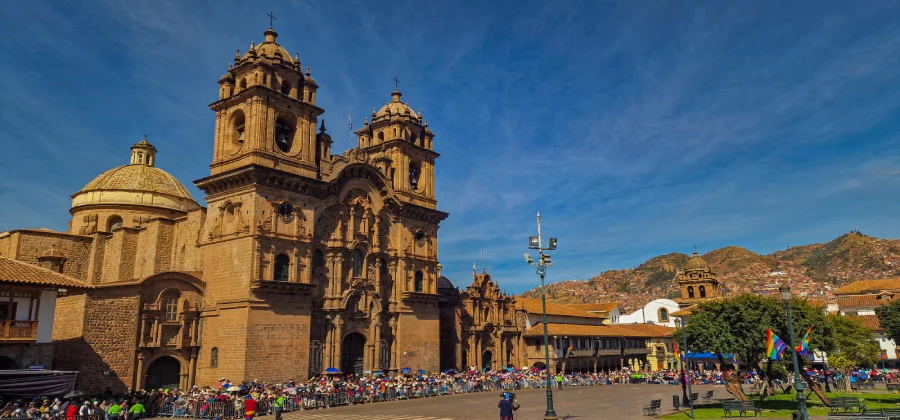
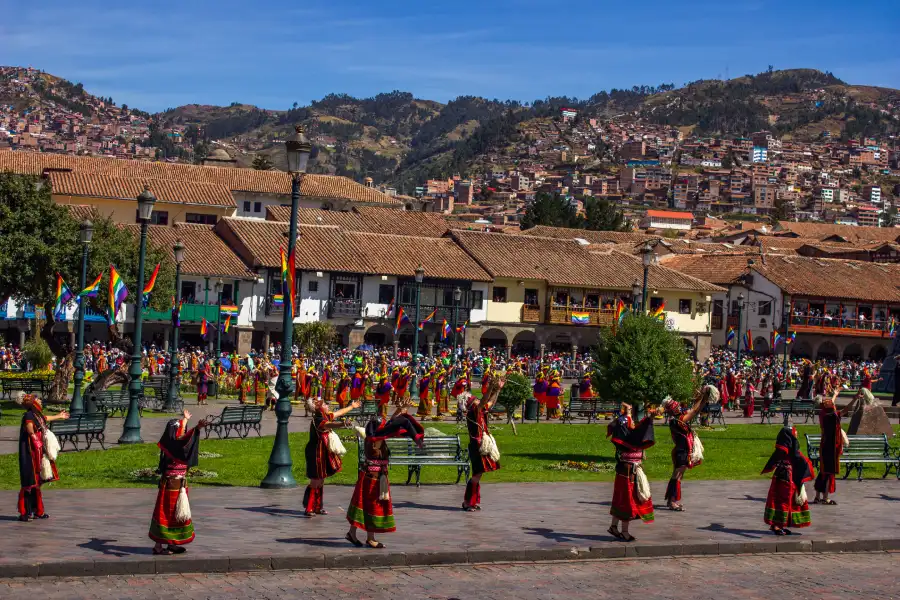
The second stage takes place in the Plaza de Armas of Cusco.
According to anthropologist Eldy Flores in the report, this part of the modern representation was introduced around the second half of the 1980s.
The scene brings together the Inca and the mayor of Cusco, symbolically connecting the city’s past with its present.
This is an important example of how the modern Inti Raymi has evolved: not every element seen today belongs to the original Inca ceremony.
The Main Ceremony at Sacsayhuamán
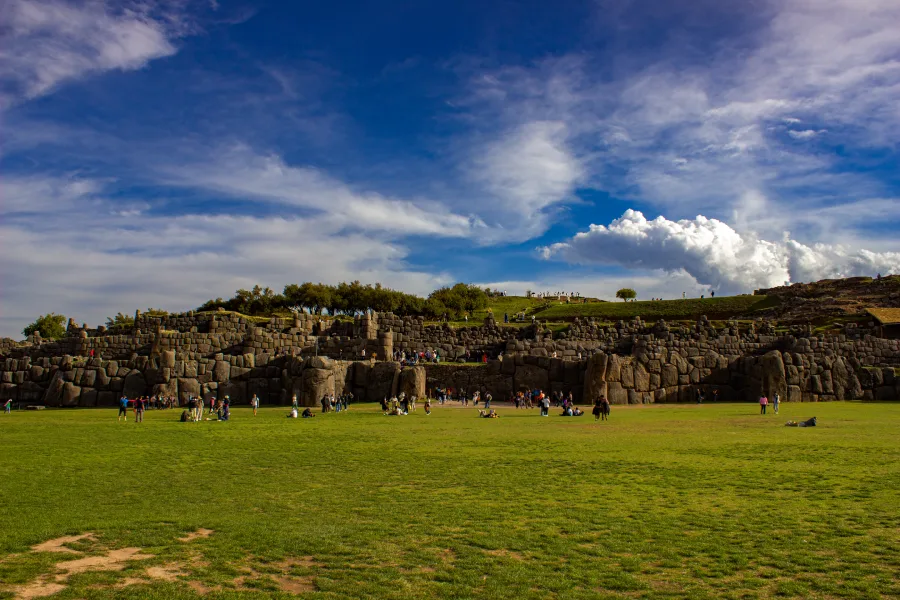
The celebration then moves to Sacsayhuamán, where the main ceremonial representation takes place.
Here, performers, music, traditional clothing, and symbolic elements come together against one of Cusco’s most impressive archaeological settings.
Sacsayhuamán is therefore more than a backdrop. It reinforces the connection between the modern celebration and the monumental legacy of the Inca world.
How the Modern Celebration Has Evolved
The modern Inti Raymi has continued to change since its revival in 1944.
As explained in the report, different institutions and groups have participated in preparing the scripts and organizing the celebration over the decades, particularly during the 1970s and 1980s.
This evolution is important because it reminds us that the modern Inti Raymi is a living cultural representation, not a fixed recreation.
Its central connection with Inca heritage remains, while its staging and interpretation have continued to adapt to contemporary Cusco.
What Changed Between the Inca Ceremony and Inti Raymi Today?
The Inti Raymi celebrated in Cusco today draws inspiration from the ancient Inca ceremony, but the two are not identical.
The historical celebration described by Garcilaso belonged to the religious and political world of the Inca Empire. The modern event, revived in 1944, is a contemporary cultural representation shaped by historical sources and later interpretations.
Understanding this difference allows us to appreciate the modern celebration without confusing it with a precise reconstruction of the original ceremony.
What We Know About the Historical Ceremony
Garcilaso describes Inti Raymi as a solemn celebration dedicated to the Sun, involving the Inca, religious authorities, curacas, military leaders, and representatives from different parts of the Empire. He also records that the celebration lasted nine days.
These accounts provide an important historical reference for understanding the ceremony’s purpose and scale.
But they describe the Inca world of their time, not the modern event performed in Cusco today.
What Belongs to the Modern Representation?
The modern Inti Raymi incorporates elements that developed after its 1944 revival.
The three-stage format through Coricancha, the Plaza de Armas, and Sacsayhuamán, for example, belongs to the contemporary celebration.
The report also explains that elements of the staging and scripts have changed over the decades. The encounter between the Inca and the mayor in the Plaza de Armas, for instance, was introduced around the second half of the 1980s.
These elements should therefore be understood as part of the modern interpretation of Inti Raymi.
What Has Remained?
Despite these changes, several central ideas continue to connect the modern celebration with its Inca roots:
- The Sun remains at the heart of the celebration.
- The Inca remains its central symbolic figure.
- Cusco remains the essential setting.
- Ceremony and collective celebration continue to shape the experience.
- Historical sources continue to inform the modern representation.
The form has changed, but the connection with Inca heritage remains.
A Tradition That Continues to Evolve
Rather than seeing these changes as a contradiction, they help us understand Inti Raymi as a living cultural representation.
The original ceremony belonged to the Inca Empire. The modern celebration belongs to contemporary Cusco.
Between the two lies a long history of interruption, cultural transformation, historical research, and revival.
That is why Inti Raymi today is best understood not as a perfect recreation of the past, but as Cusco’s contemporary way of remembering and representing its Inca heritage.
Why Inti Raymi Still Matters Today
Inti Raymi continues to hold an important place in Cusco because it connects historical memory with contemporary cultural identity.
The celebration has changed over time, but its connection with Inca heritage remains central. As anthropologist Eldy Flores explains in the report, traditions naturally evolve, and these changes can strengthen rather than erase cultural identity.
For Cusco, Inti Raymi is therefore not simply a celebration of something that happened centuries ago. It is a way of bringing that heritage into the present.
Inti Raymi and Cusqueño Identity
Inti Raymi has become an important expression of Cusqueño identity.
The celebration brings together historical places, traditional performances, music, costumes, and the symbolic figure of the Inca. Through these elements, Cusco presents part of its cultural heritage both to Peru and to visitors from around the world.
The report emphasizes precisely this role: the celebration has become a way for Cusqueños to strengthen and project their cultural identity.
From Historical Memory to Living Culture
The history of Inti Raymi shows that culture does not remain frozen.
The original ceremony was interrupted during the colonial period. Centuries later, its memory was revived through a modern representation that has continued to evolve.
Today, Inti Raymi exists between history and the present.
It draws from the Inca past while being interpreted and performed by contemporary generations in contemporary Cusco.
That is what makes it more than a historical reenactment: it is part of a living cultural tradition.
Why Travelers Should Understand the History Before Attending
For travelers, knowing the history changes the way Inti Raymi is experienced.
Instead of seeing only a large cultural performance, visitors can understand the layers behind it:
Inca ceremony → colonial transformation → 1944 revival → modern Cusco.
The three locations of the celebration also become more meaningful when viewed within this context.
Coricancha, the Plaza de Armas, and Sacsayhuamán are not simply places where performances take place. They form part of the historical landscape through which Cusco presents its Inca heritage.
Understanding that story allows visitors to experience Inti Raymi not only as a spectacle, but as a window into Cusco’s relationship with its past and its cultural identity today.
Frequently Asked Questions About Inti Raymi
-
What does Inti Raymi mean?
Inti Raymi refers to the solemn festival dedicated to the Sun. Inca Garcilaso de la Vega describes Intip Raymi as the most solemn of the four principal festivals celebrated by the Inca rulers in Cusco.
-
When was Inti Raymi celebrated by the Incas?
Garcilaso states that the historical Intip Raymi was celebrated after the June solstice. The modern public celebration takes place on June 24 in Cusco.
-
How long did the Inca Inti Raymi last?
According to Garcilaso, the historical Raymi lasted nine days, combining ceremony, food, drink, and celebration.
-
Why was Inti Raymi important to the Incas?
The festival honored the Sun, whom the Incas regarded as a supreme divine force and as the father of the Inca rulers. It also brought together the Inca, religious authorities, curacas, military leaders, and representatives from across the Empire.
-
When was Inti Raymi revived?
The modern public representation of Inti Raymi was revived in Cusco in 1944, beginning a new chapter in the history of the celebration.
-
Where is Inti Raymi celebrated today?
The modern celebration takes place across three main locations in Cusco:
Coricancha → Plaza de Armas → Sacsayhuamán.
These locations form the three-part structure of the contemporary representation. -
Is the modern Inti Raymi the same as the original Inca ceremony?
No.
The modern Inti Raymi is a contemporary representation inspired by historical sources and the memory of the Inca ceremony. The original celebration belonged to the religious and political world of the Inca Empire, while today’s event has evolved as a cultural and theatrical representation.
This distinction is important when understanding Inti Raymi history.
A Celebration That Survived in Memory
The story of Inti Raymi is a story of ceremony, interruption, memory, and revival.
It began as one of the most important celebrations of the Inca world, was interrupted during the colonial period, and returned to public life in Cusco in 1944.
Today, the celebration continues to connect contemporary Cusco with its Inca heritage.
Perhaps that is the most meaningful way to understand Inti Raymi: not as an unchanged ceremony from the past, but as a cultural tradition through which Cusco continues to remember and interpret its history.
For travelers, knowing that story can transform the experience. What appears to be a single celebration in June becomes part of a much larger journey through the history and cultural heritage of Cusco.
Explore the Inca Heritage Beyond Inti Raymi
Inti Raymi offers one way to connect with Cusco’s Inca heritage. But the story does not end with the celebration.
The temples, archaeological sites, Sacred Valley, and Inca Trail to Machu Picchu offer other ways to discover the world that shaped this remarkable culture.
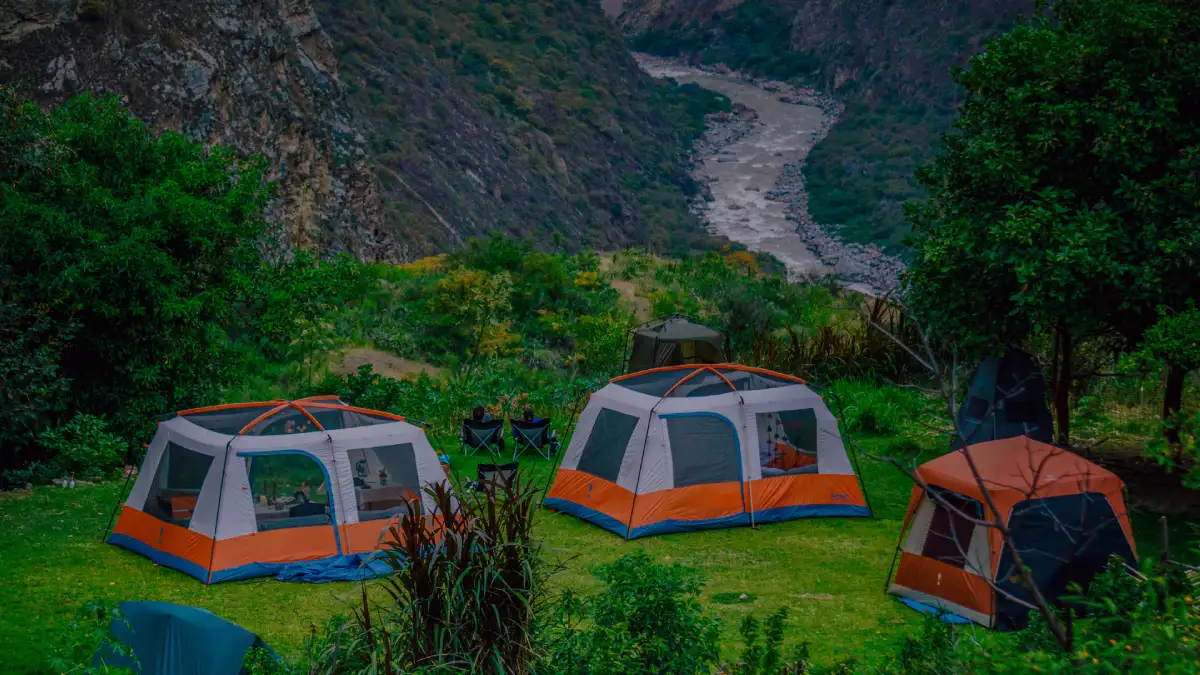
If you want to experience Peru beyond its famous landmarks, explore our Glamping Inca Trail experiences and discover the Inca heritage through the landscapes and trails of the Andes.
Our Glamping Inca Trail Tours experiences