
Imagine walking through the Peruvian Andes, surrounded by towering mountains, ancient Inca pathways, and landscapes that seem to stretch endlessly into the distance. The scenery may be the same, but the experience can feel very different depending on who you travel with.
Choosing between private vs group trekking in Peru is an important part of planning your adventure. Both options allow you to explore destinations such as the Inca Trail, Salkantay, and Lares, but they offer different levels of flexibility, personal attention, social interaction, and comfort.
A shared group trek can be ideal for travelers who enjoy meeting new people and following a structured itinerary. A private trek, meanwhile, offers a more personal experience designed around your own travel party.
Neither option is universally better. The right choice depends on your priorities, budget, hiking experience, and the kind of memories you want to create.
This guide compares both trekking styles and shares five practical tips to help you choose the experience that best suits your journey through Peru.
Table of Contents
Understanding Private and Group Trekking in Peru
Before comparing prices or accommodation, it’s important to understand what each type of trekking experience actually means.
What Is a Private Trek?
A private trek is organized exclusively for you and the people traveling with you.
Whether you’re exploring the Andes as a couple, a family, or a group of friends, you won’t be combined with unrelated travelers booked on the same departure.
Private trekking arrangements generally provide a dedicated guide and may include a separate support team, depending on the itinerary.
This allows greater personal attention and more opportunities to discuss your preferences before and during the journey.
Private doesn’t necessarily mean traveling alone. A family of six or a group of eight friends can book a private trek and enjoy the journey together.
What Is a Shared Group Trek?
A shared group trek brings together travelers who reserve places on the same scheduled departure.
Participants generally follow a common itinerary, share guiding services, and travel according to the group’s established schedule.
These experiences can appeal to solo travelers, friends, and couples interested in meeting people from different countries.
Group sizes, accommodation arrangements, and included services vary by operator.
Importantly, a small-group tour is not automatically private. Even a departure with only six participants may include travelers who booked independently.
Private vs Group Trekking in Peru: Key Differences
The following comparison highlights the main characteristics of both travel styles.
| Travel Factor | Private Trekking | Shared Group Trekking |
|---|---|---|
| Travel companions | Only your chosen party | Other travelers on the same departure |
| Cost | Usually higher for a small party | Usually lower per traveler |
| Departure dates | More choice, subject to availability | Predetermined scheduled departures |
| Hiking pace | Adapted more closely to your party | Coordinated around the wider group |
| Guide attention | Dedicated to your party | Shared among participants |
| Privacy | Greater privacy within your travel party | More opportunities for social interaction |
| Accommodation | Depends on the selected package | Depends on the selected package |
| Personalization | More room for individual preferences | Usually follows established arrangements |
Neither option changes the physical demands of the mountains or removes official access restrictions.
A privately guided Inca Trail trek still follows regulated routes and requires the same applicable permits as a shared departure.
Five Best Tips for Choosing Your Trekking Experience
Rather than choosing solely by price or the word luxury, consider how each travel format will affect your actual days on the trail.
These five factors can help you make a more informed decision.
1. Compare the Total Cost, Not Just the Starting Price
Budget is often one of the first differences travelers notice.
Shared group treks are generally more affordable because essential operating costs are distributed among several participants.
Transportation, guiding services, meals, and camping logistics can be shared across the group, reducing the cost per person.
Private trekking works differently.
The guide, transportation, and support arrangements are reserved for your travel party. When only one or two travelers book, these costs are divided among fewer people.
However, a private trek for a larger family or group of friends may offer better value per person than a private departure for two.
When comparing quotations, check whether both options include:
- Trekking permits and archaeological entrance tickets.
- Transportation and train services, where applicable.
- Accommodation and camping equipment.
- Meals, drinking water, and dietary arrangements.
- Guides, porters, and luggage assistance.
- Personal comfort services and optional activities.
A cheaper starting price doesn’t always represent the same level of service.
Best tip: request a complete breakdown of inclusions and compare the final cost per traveler before deciding.
2. Consider How Much Flexibility You Really Need
Some travelers enjoy having every detail arranged in advance. Others prefer greater freedom within their journey.
On a shared group trek, departure dates, daily schedules, and planned activities are generally established beforehand.
This structure can make planning easier, particularly for travelers who prefer an organized experience without additional decisions.
Private trekking allows more discussion around preferences.
Depending on the route and operator, you may be able to arrange departure dates, meal preferences, the timing of rest breaks, or particular interests you want your guide to emphasize.
For example, travelers interested in Andean culture may appreciate more detailed explanations at archaeological sites, while photography enthusiasts may prefer additional stops at suitable viewpoints.
However, private trekking does not mean unlimited flexibility.
Regulated Inca Trail routes, Machu Picchu entrance times, designated campsites, weather conditions, and safety requirements still apply.
Best tip: identify which aspects of your journey matter most and confirm which adjustments are genuinely possible before booking.
3. Choose a Hiking Pace That Matches Your Experience
Walking rhythm can make a noticeable difference during a multi-day trek.
Some travelers are comfortable maintaining a steady pace for several hours. Others prefer shorter walking intervals with more frequent breaks.
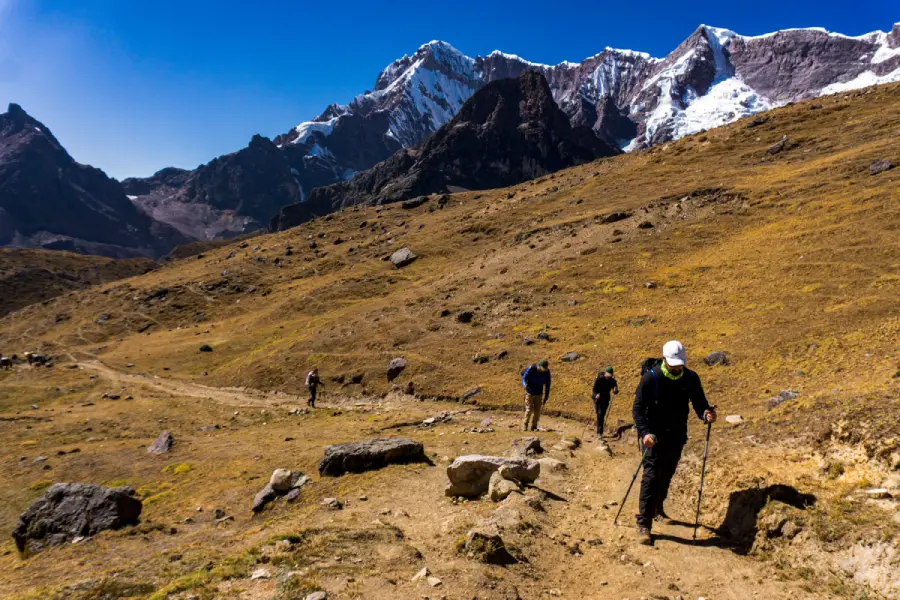
On a shared trek, the guide must consider the needs of everyone in the group.
A responsible operator will manage different hiking abilities, but the overall schedule still requires coordination among participants.
With a private guide, the walking rhythm can be adapted more closely to your own party within the day’s practical limits.
This can be particularly useful for families, couples with different fitness levels, or travelers who enjoy taking their time to appreciate the landscape.
However, walking more slowly does not eliminate altitude-related risks.
Routes such as Salkantay and Ausangate still require suitable physical preparation and acclimatization, regardless of whether the service is private or shared.
For help comparing the physical demands of different itineraries, explore our Trekking Difficulty in Peru guide.
Best tip: choose a trek based on your fitness and experience first, then consider the level of pacing flexibility you prefer.
4. Think About Privacy and Social Interaction
One of the most enjoyable aspects of trekking is sharing memorable moments with others.
For some travelers, that means meeting people from around the world, exchanging stories at dinner, and building friendships along the trail.
A shared group trek naturally offers opportunities for these experiences.
For others, the ideal journey is more personal.
A couple celebrating an anniversary may prefer time together without unfamiliar companions. Families may enjoy exploring at their own pace, while close friends may want to share an adventure exclusively with one another.
Private trekking creates space for these experiences without combining separate bookings into one travel group.
Still, privacy should not be confused with having an entire trail to yourself.
Other hikers may use the same paths, and access to public archaeological sites remains subject to shared visitor regulations.
Best tip: decide whether you value meeting new people or spending uninterrupted time with your chosen companions.
5. Evaluate Guide Attention and Personal Service
A knowledgeable local guide contributes much more than directions along the trail.
Guides interpret archaeological sites, share Andean history and traditions, monitor the group’s progress, and coordinate the daily journey.
On shared treks, this attention is distributed among the participants.
Travelers can still enjoy excellent guiding, but explanations, questions, and stops must accommodate the wider group.
With a private guide, conversations can be more closely aligned with your interests.
You may want to learn about Inca engineering, traditional Andean communities, the mountain environment, or the cultural importance of places visited along the route.
Private attention can also make communicating dietary requirements, personal concerns, and preferences more straightforward.
The quality of the guide, however, depends on professional experience and service standards, not simply whether a tour is private.
Best tip: confirm the guide’s qualifications, language, experience, and the support arrangements included in your chosen itinerary.
Is Private Trekking the Same as Luxury Trekking?
Private and luxury trekking are related concepts, but they are not identical.
A private trek refers primarily to the way the journey is organized and who participates.
Luxury trekking describes the standard of accommodation, comfort, meals, logistics, and additional services provided.
You can book a privately guided trek with relatively simple camping arrangements. Likewise, some operators may offer upgraded accommodation on shared group departures.
At Glamping Inca Trail, selected private experiences combine dedicated guides and support teams with more refined camping arrangements.
Depending on the route, these may include:
- Comfortable beds and quality bedding.
- Prepared meals featuring Peruvian cuisine.
- Hot showers and private toilet facilities.
- Dedicated trekking and camp support teams.
- Wellness services and personalized attention.
For example, the Private Inca Trail Trek 4 Days combines a private trekking experience with luxury glamping camps and a dedicated support team.
Other itineraries may include hotel accommodation or different camping arrangements.
These amenities can make the journey more comfortable, but they do not remove steep climbs, mountain weather, or high-altitude challenges.
The distinction matters because travelers should know whether they are paying for privacy, upgraded facilities, additional services, or a combination of these benefits.
Which Trekking Style Is Best for Different Travelers?
Your ideal trekking experience depends on more than the route itself.
Solo Travelers
A shared group trek can be an attractive option for solo travelers who enjoy social interaction and want to distribute costs among other participants.
A private trek may appeal to solo travelers who prioritize personal guiding and a more individualized journey, provided the additional cost suits their budget.
Couples and Honeymooners
Couples may prefer a private trek when celebrating a honeymoon, anniversary, or another special occasion.
Traveling with a dedicated guide allows the experience to remain centered on the couple while retaining professional support along the route.
A shared group can also be suitable for couples who prefer a more social atmosphere.
Families and Groups of Friends
Private trekking can be particularly practical for families and friends who already have their own travel party.
It allows everyone to share the journey without being combined with unrelated guests.
A dedicated guide can also coordinate rest breaks and daily arrangements around the party’s needs, within the limits of the itinerary.
Experienced Hikers
Experienced hikers may appreciate the personal pacing and detailed route discussions available on a private trek.
However, a shared departure can be equally rewarding when participants have compatible fitness levels and expectations.
Neither format replaces responsible preparation for demanding mountain conditions.
Choosing a Private Trekking Route in Peru
Once you’ve decided which travel style suits you, the next step is choosing the right landscape and level of adventure.
Glamping Inca Trail offers private experiences across several routes in the Cusco region.
For Inca History: Private Inca Trail
The classic four-day Inca Trail combines historic stone pathways, archaeological sites, high mountain passes, and an arrival toward Machu Picchu through the Sun Gate.
A private guide allows more individualized explanations and personal attention throughout the journey.
The route remains physically challenging and subject to official permit and access regulations.
For Mountain Scenery: Luxury Salkantay Trek
The Luxury Salkantay Trek to Machu Picchu offers dramatic Andean landscapes, high mountain terrain, and a journey toward Machu Picchu.
Its private format includes a dedicated guide and trekking support.
This route appeals to travelers looking for a mountain-focused adventure while retaining personalized service.
For Cultural Experiences: Luxury Lares Trek
The Luxury Lares Trek 4 Days combines mountain landscapes with encounters connected to traditional Andean communities.
A private journey provides opportunities for conversations with your guide about local traditions, the landscape, and the places visited.
The itinerary also includes high-altitude sections, making physical preparation important.
Each route offers a different experience. Rather than selecting a destination solely because it is popular, consider its difficulty, duration, accommodation, and personal appeal.
You can compare the complete collection of Luxury Trekking Tours in Peru before deciding.
Questions to Ask Before Booking
Whether you’re considering a private or shared departure, ask your operator a few essential questions:
- Will the trek be exclusive to my party or shared with other travelers?
- What is the confirmed group size, and how many guides will accompany us?
- Can the hiking pace and rest stops be adapted when necessary?
- Which meals, accommodation arrangements, permits, and transportation services are included?
- Are the camps, bathrooms, and support team private or shared?
- What happens if weather, illness, or trail restrictions affect the itinerary?
Clear answers help you understand what you’re purchasing and avoid assumptions based on marketing terms alone.
Frequently Asked Questions About Private and Group Trekking
-
Is private trekking in Peru worth the extra cost?
Private trekking can be worthwhile for travelers who prioritize a dedicated guide, personal attention, and greater flexibility within their itinerary. Couples, families, and groups of friends may particularly appreciate these benefits. However, a well-organized shared group trek can offer excellent value when privacy and personalization are less important.
-
Is a private Inca Trail trek easier than a group trek?
Not necessarily. Both formats follow the same challenging mountain terrain and are subject to official route regulations. A private guide can adapt the walking pace and rest breaks to your party, but this doesn’t reduce the altitude, distance, or physical demands of the trail.
-
Can families or friends book a private trek together?
Yes. Private trekking is not limited to individuals or couples. Families and groups of friends can travel together with their own guide and support team. This arrangement allows the journey to remain exclusive to their party while distributing the cost among the participating travelers.
-
Are group treks cheaper than private treks in Peru?
Shared group treks are generally less expensive per person because operating costs are distributed among multiple travelers. Private trekking often costs more for individuals or couples, although the price per traveler can become more competitive for larger private parties. Final pricing depends on the itinerary, group size, and included services.
-
Does booking a private trek guarantee more privacy at Machu Picchu?
No. A private trek provides exclusive guiding arrangements for your travel party, but it does not grant exclusive access to Machu Picchu or other public archaeological sites. Visitor circuits, entrance times, permits, and official regulations continue to apply to both private and shared group experiences.
Find Your Ideal Trekking Experience in Peru
The decision between private and group trekking comes down to how you want to experience the Andes.
A shared trek offers opportunities to meet fellow travelers and follow a structured journey, often at a lower cost. A private trek provides greater personal attention, flexibility, and time with the people who matter most to you.
If privacy, dedicated support, and refined mountain comfort are priorities, a private glamping experience may be the right fit.
Explore our Luxury Trekking Tours in Peru and discover thoughtfully designed private journeys through the Inca Trail, Salkantay, Lares, and beyond.